Saturday, December 11, 2010

2010 Mustang GT 2200km Test Drive

07-28-2009

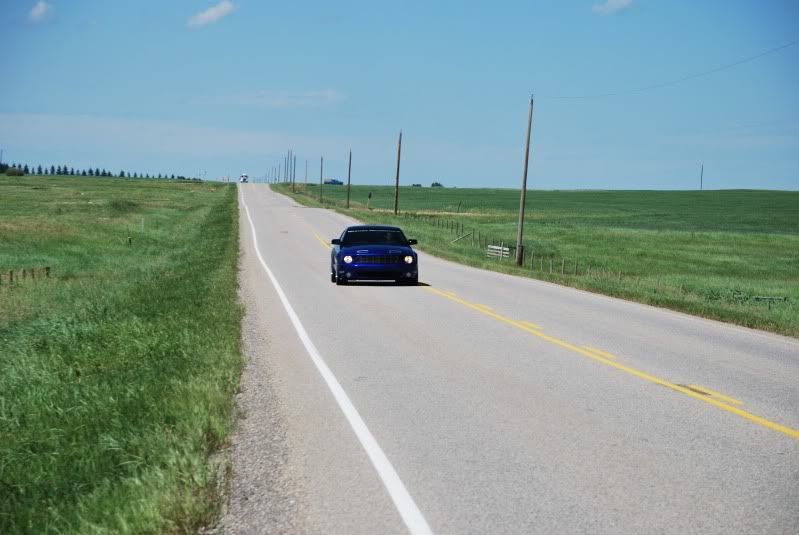
Test Drive is a little bit of a stretch I suppose, more like rental that I treated as a test drive. During my recent trip home to the Atlantic Provinces, I resolved that renting an interesting car might make the experience a little more interesting. A bit of time on the interweb offered the 2010 Mustang Coupe (V6) from Budget rentals in the Halifax Airport.

Upon arrival and check-in with Budget I was pleasantly surprised when the clerk gave me the keys to a Red 2010 Mustang GT, as a V6 was unavailable at that time, game on, my trip just got more interesting. At the fore-front of my mind was the fact that this new car has a love or hate relationship with many online Mustang enthusiasts, and this would be a golden opportunity to compare, without the pressure of trying to be popular in the car magazines.

For the short list, the vehicle was as tested a 2010 Mustang GT with the only option being a 5-speed Automatic Transmission. List price for this car was $38,429.00 CDN

Link to Virtual window sticker below: (Adobe Document)
http://services.forddirect.fordvehicles.com/inventory/WindowSticker.pdf?vin=1ZVBP8CH1A5118337

Fun fact, if you take the above link and paste your own VIN in place you can see your virtual window sticker if your car is fairly new, pre-05 need not apply…

For anyone who doesn’t wish to hear me prattle onwards and see lots of photos, my overall assessment of the car is Positive. It is a great car and I give it high recommend, however I do not personally prefer this car over the previous 05-09 models, and I’ll relay that as the article progresses.

As first interaction most people have is with the exterior, I shall cover it first.
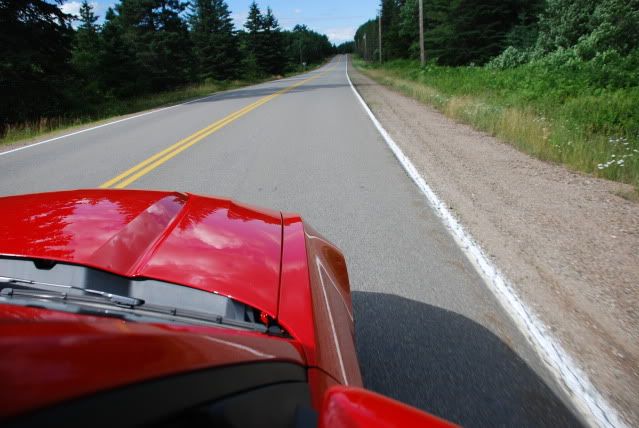
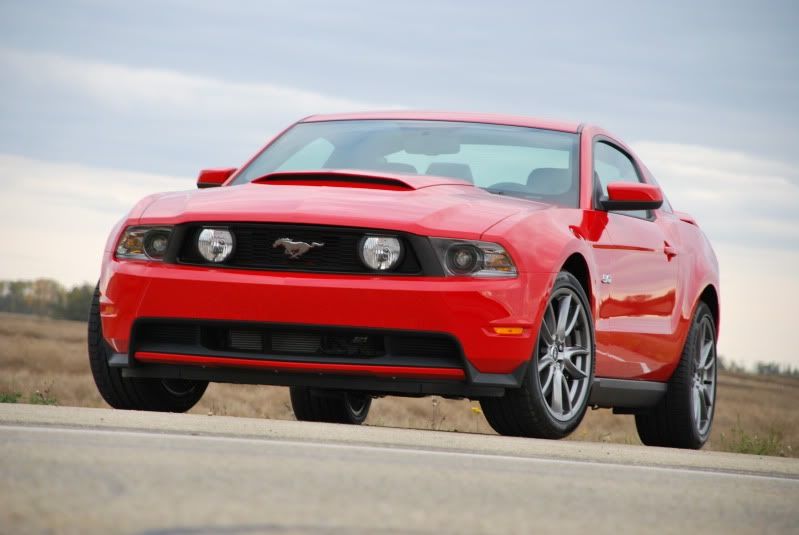
This is a really tough call, personally I enjoy the look of the 2005-09 cars much more but you just can’t ignore the work Ford has put into the new model. Things like the smaller grille area and headlights have grown on me, as have the little “fairings” that protrude from the lower front valence. The extra styling found in the fenders is quite pleasing to the eye and no one could ignore the massive “power bulge” the molded in to the hood, fantastic! It all comes together very well in person, that is until you reach the back of the vehicle, we all knew this would be a sore point didn’t we?
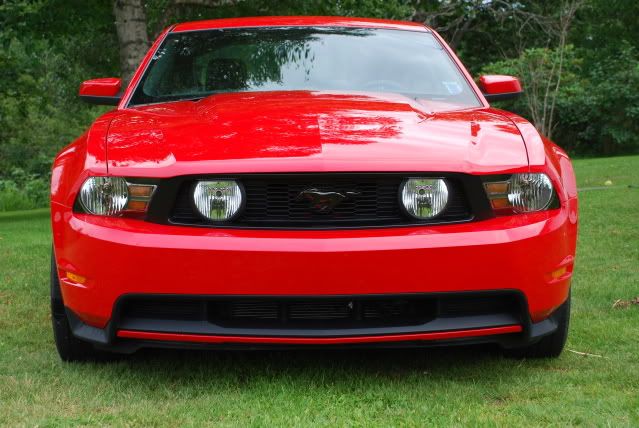
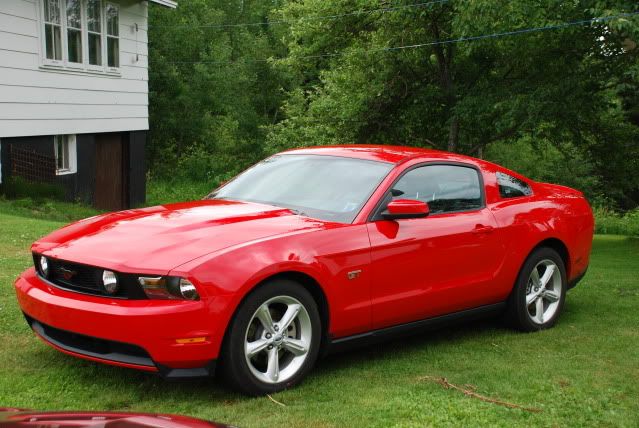


I believe it was Motor Trend who drew attention to the trunk lid not fitting well, and in person I see what they mean, but not without some explanation. If you were to walk a semi-circle around the back of this car, taking only 10 steps, things would look just fine for 8 of those 10. However some where near the middle you find an angle that makes it all look very wrong, and it’s mostly an optical illusion but the tail lights appear flat against the concave trunk lid, making it seem off.
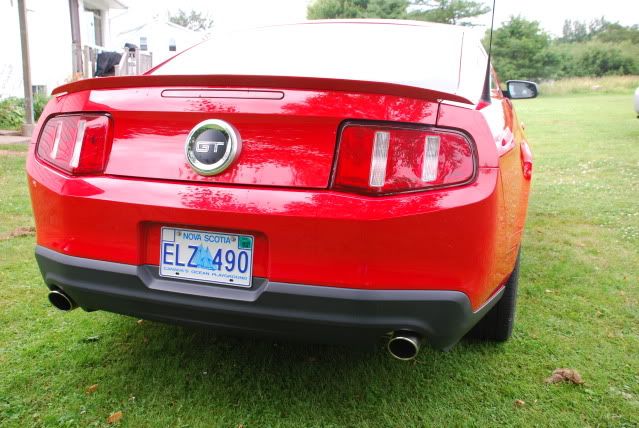


It does in actuality fit well and keeps your luggage dry but you won’t be impressed if you push in on the bottom trunk edge, very flexible…
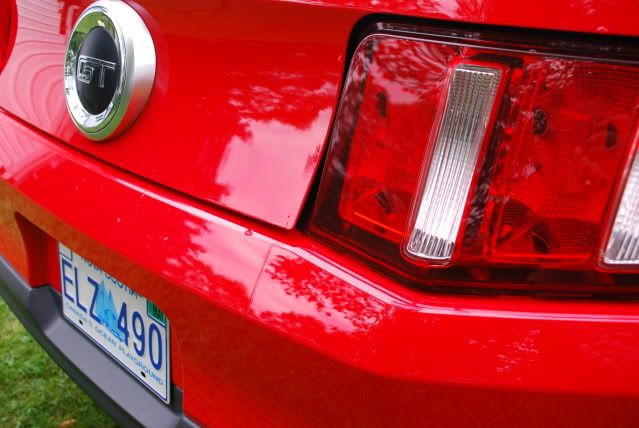


Another couple of nagging bits is the huge Texas belt-buckle sized emblem, its cheap plastic and makes awful crunching sounds if you push on it, I think the two piece design allows dust between the layers causing this. The other is the rear mounted “shorty” antenna it’s in a great place, but looks exceptionally poorly crafted.
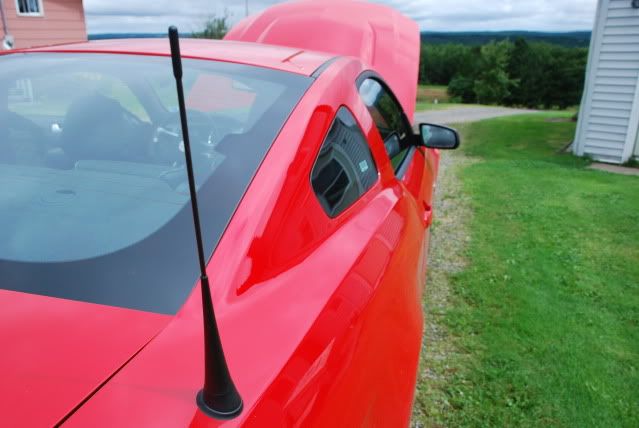


Finally is the rear spoiler, it seems alright until you pop the trunk then the thin, unsupported tips become apparent. I think these guys might be susceptible to damage if used as a handle to close the trunk, like I caught a few family and friends doing.
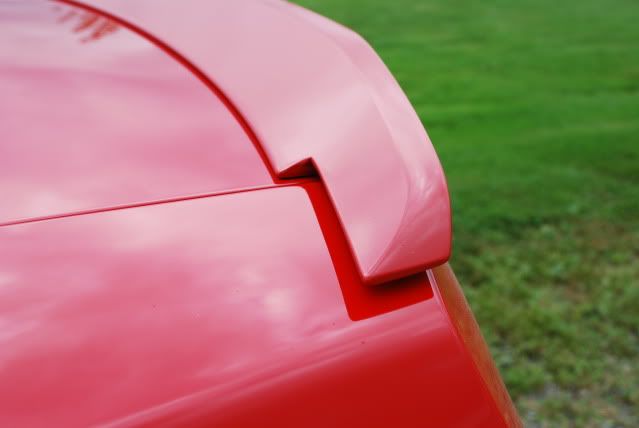


I may very much like my Retro Mustang, but this new car gets a solid 9/10 in the exterior styling department, this car truly does look like the next evolution of the Mustang GT, that is, aside from the rear end…

I quick thought is the Wife described the rear as looking like an economy car, and from the right angle I think she may be on to something…

Logic would say move to the interior next, but let’s cover the dynamic parts first, it’s certainly more fun.
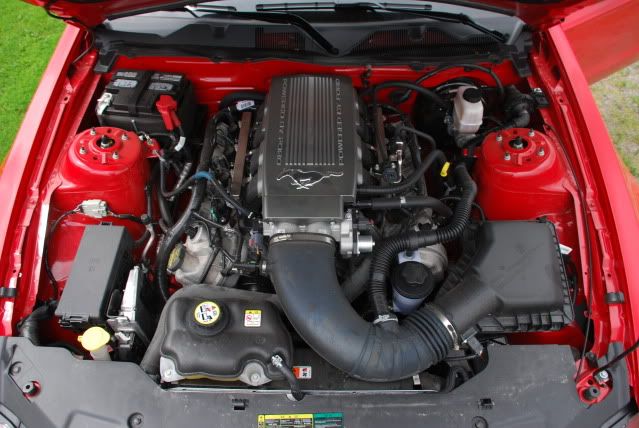


Here I’ll come right out and say good work, when you consider that this power plant is a carry-over, it is brilliant. It makes all of the right sounds all of the time, the 2010’s mufflers sound very good. Anyone who isn’t a Borla Stinger fan would be appeased with a simple High-flow catted mid-pipe swap, the tone is perfect just could use a little more volume, but it is damn close.
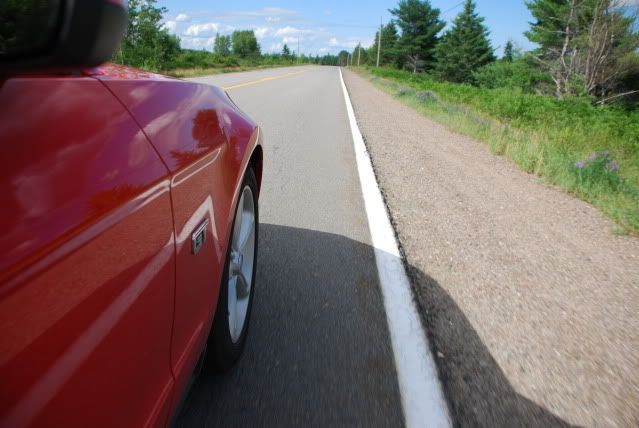


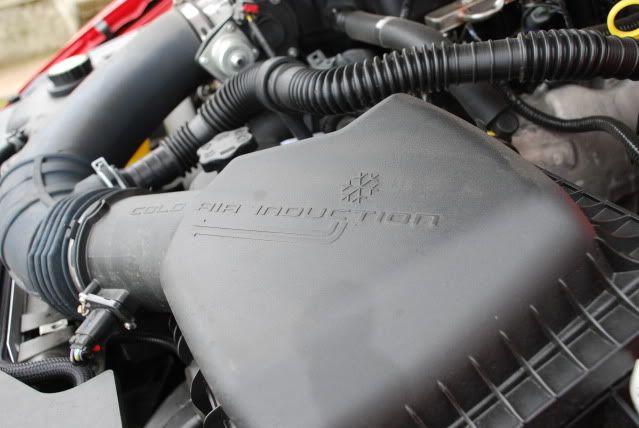
The tube that channels intake noise to the interior, while first assessed as a useless bobble, worked awesome, somehow they managed to transmit the growl of the exhaust to the front of the car. It’s silent at cruise but really encourages more throttle once you begin to open the taps, I’m quite impressed.


The 6,500 rpm shift point is noted as well and the Automatic transmission is quick. It may not have that neck snapping authority but it is perhaps the fastest shifting production Ford I’ve been in.
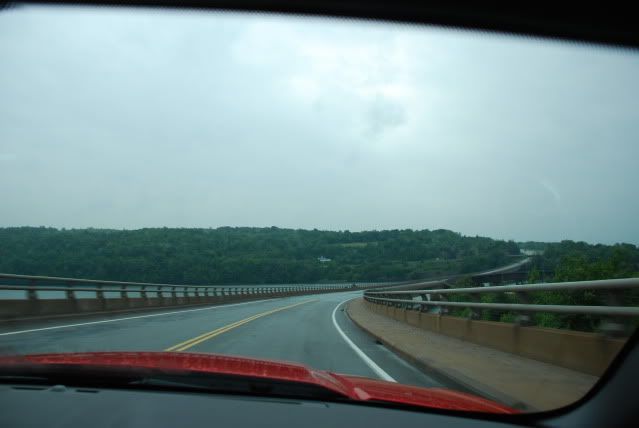

Power bulge!


The Automatic did add one neat element, disable the TCS, stomp both pedals and those Pirelli’s turn to glorious smoke, got to love paying for the extra rental insurances…

Fuel economy? On the highway it could easily see 30 MPG, but after 2200km of all types of driving we averaged 22.2MPG. (10L/100km)

The car handled the rough and narrow roads of rural Nova Scotia and New Brunswick with confidence and poise, but I did notice one thing. Compared to my old 84 Mustang with its terrible 2.3L engine, the 2010 was clearly much faster and handled better through the roads of my teenage years. But it was markedly bigger, massive actually, especially when sharing a shoulder-less two lane with an oncoming logging truck. On the flip side though, with the exhaust rumbling at part throttle load it did have presence, and people did take notice.
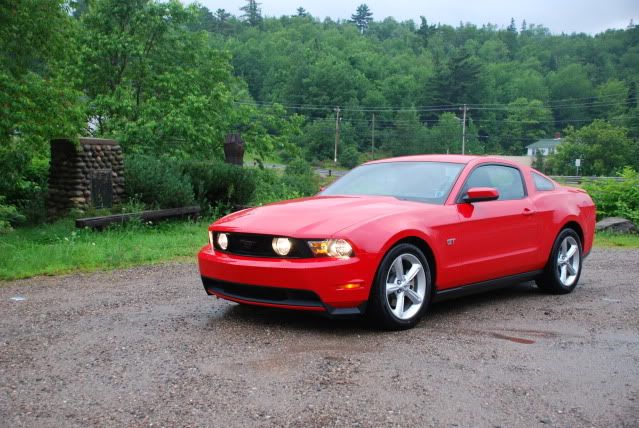


The car was excellently balanced and it took a fair bit of careless throttle over rough roads to get the rear to step out of line, being a rental I was merciless. I was only able to willfully bottom out the suspension once, a non-transitioned section where 2” depth (x15ft long) of pavement had been removed; 50km/h did overcome (BANG!) the shock absorbers. Under normal conditions a reasonable person would have dropped their speed to a crawl, and never experienced this condition.

Wrapping things up with an exploration the interior draws this extended road test to a close. I actually took down a list of items about the interior that caught my interest or ire so I’d remember them all.
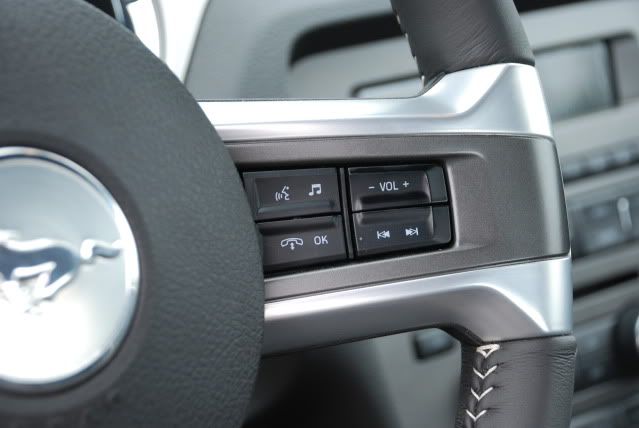


Overall the new interior takes some getting used to over the older layout, but it does make the Mustang seem more polished, like the interior of a European Import. And I think that is what Ford was going for, not that I like it, but it will likely be quite popular and that is what makes money these days.

The next few items will appear very nit-picky to most people but coming from a 2009 and hopping into a 2010 you’d probably have the same changes jump out at you. And honestly we are comparing Mustangs to Mustangs here, it’s the subtle differences that make a car unique.

The seats are familiar Leather from the GT500 and Bullitt of previous years and feature a nice contrasting “baseball” stitching, they were good before and still hold true.

Finally since 2004 we see the return of an interior power trunk release, it’s kind of just bundled in with the TCS/Hazards next to the shifter, but it’s great to see it again. I’d have it moved inside the dash or armrest but that’s just me.
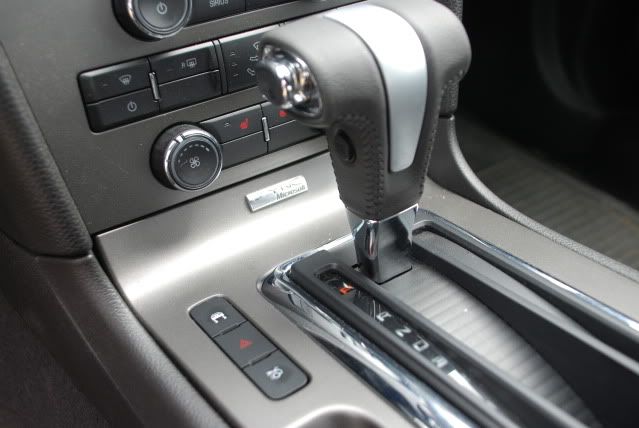

The shifter (auto) is a decent design and is fairly ergonomic; the O/D off button is a little too far down and doesn’t have that easy tap of the thumb use. I am however told the 05-09 shifters were worse so I’ll call it an improvement.

The radio system is much more integrated, and the Sirius functions like it belongs there, the original Shaker systems seemed a little “made to work” But the Sirius was much more finicky with signal, could be a geographical thing, or perhaps it is something else.

The gauge faces are bold and bright, offering a modern appearance, sadly the needles are too thick and will totally obscure the tach/speedo markings often giving an imprecise +/- 5 km/h visual glance.
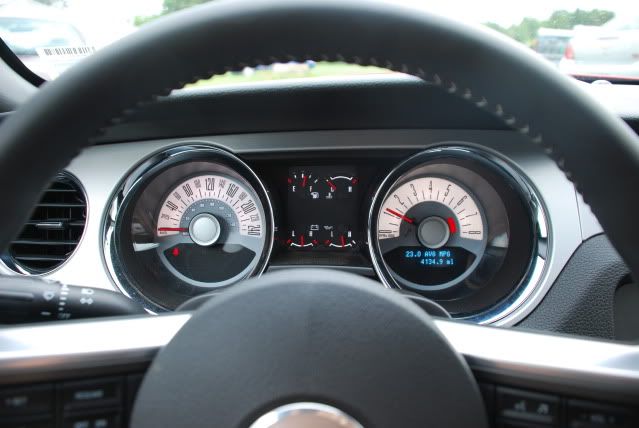


Gone are the two separate stalks on the steering column and instead is a single multi-function switch on the left side, like the old pre-05 cars. My only annoyance was just having gotten used to the 2009’s two stick arrangement; I swatted the ignition key ineffectively looking for the wipers once.

Speaking of wipers, they are the spring-less design from the Gt500 and they got a lot of use during my trip, mainly due to the 8 (of 10) days of rain. Further due to the power bulge cowl had a habit of covering the outside of the windshield in humid fog, I hope that is just another geographical thing.


While I did remark at the loss of the two center round HVAC vents, the new design offers a covered high mount 12V plug and a neat little shelf on the dash pad that might as well have “Radar Detector Here” stenciled on it. That I thought was a keen idea.
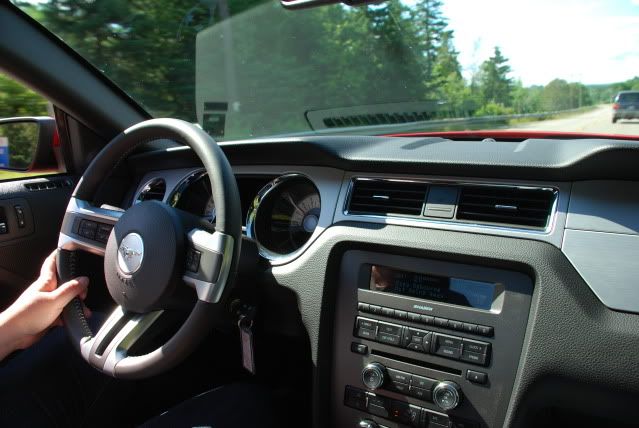
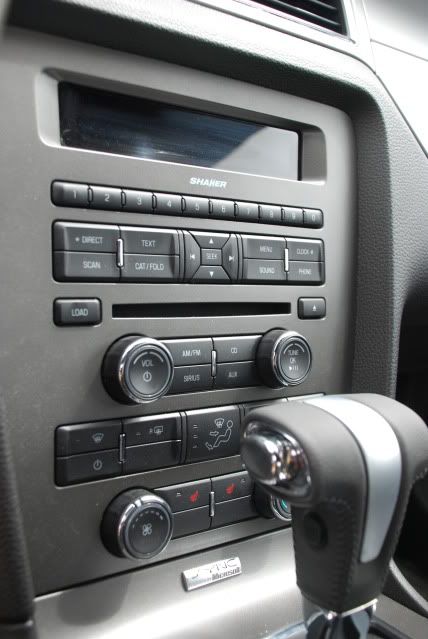
Moving down the center stack, I was immediately put off by all of the new buttons, there is just too many of them, which made quick reference and adjustment annoying. I’m sure this is what the modern Mustang owner wants, but is it really necessary to require operation of the blend door by cycling 1 button multiple times through all positions until the LED’s on the diagram match with what you wanted? HVAC should be nothing more that 3 large rotary knobs and 3 buttons Rear Defrost, Re-Circulate, and A/C. I noted we had heated seats in this model, they seemed to have two positions OFF and Ouch, not that you use them much hidden behind the shifter and all.

This model features Microsoft Sync, anyone not familiar with the system is encouraged to look of google for a quick primer, but it was fairly easy to make my Blackberry work as a hands free via the vehicle sound system. It appears to have a number of great options that I didn’t really explore with a rental. Aside from being a little choosy with its voice commands, it worked quite well.

The console is probably one of my final and larger gripes, it looks very nice and has a cover for the two cup holders I despise from the 05-09’s, but it looks like something that will break one day. Fox owners know what I’m on about here…ashtray cover style…
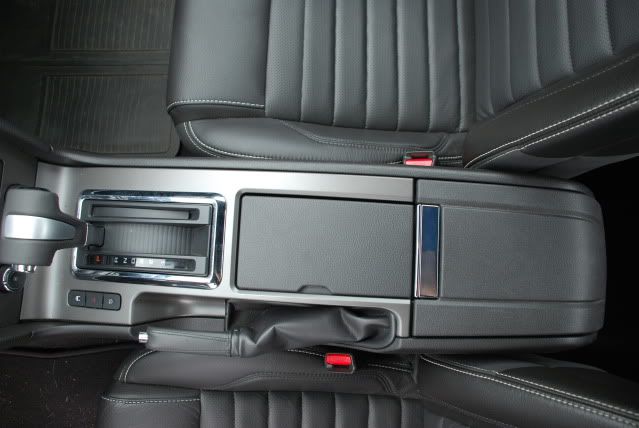
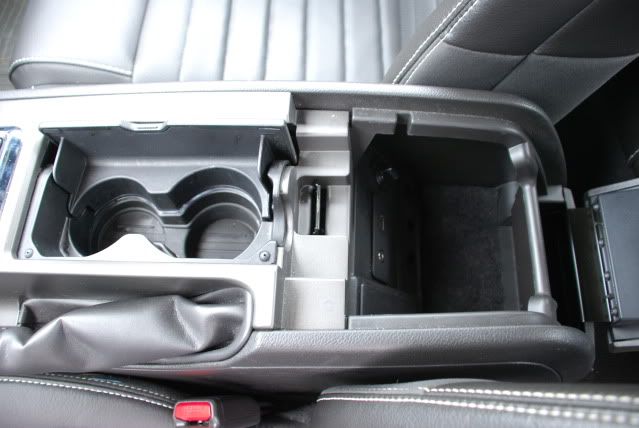
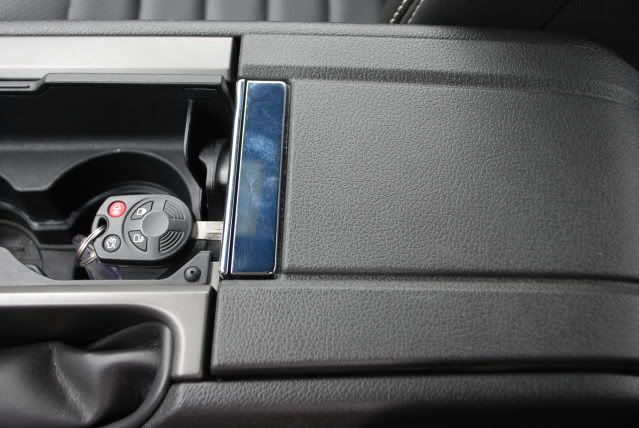
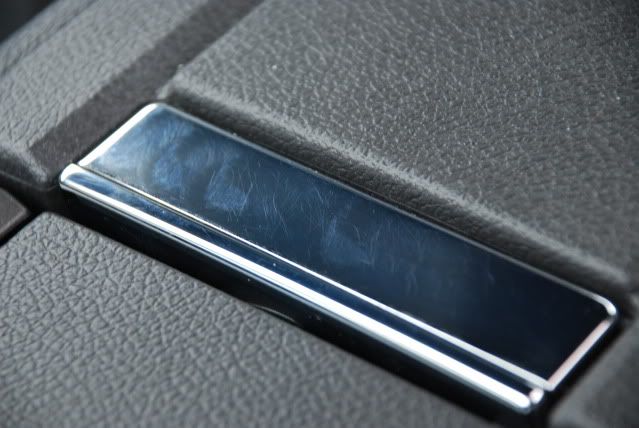
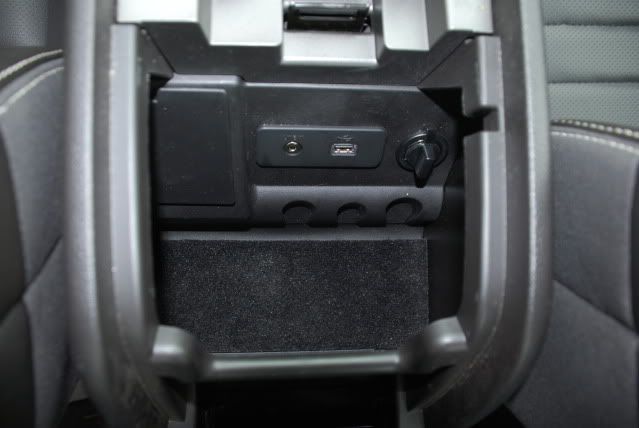
The armrest is gone, you now have a flat console I don’t like it, period. The latch for the console storage is now lockable, which is fantastic but the spring opening button simply doesn’t work properly, an un-needed driving distraction. My test car started out with only 6000km’s and it already had scratches to the chrome applique, this doesn’t speak well for a lifetime ownership car. The storage bin does have 12V point, AUX jack, and a USB port but overall capacity seems quite reduced.


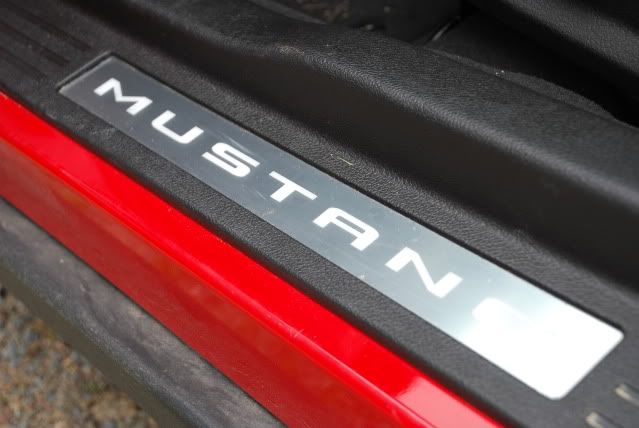
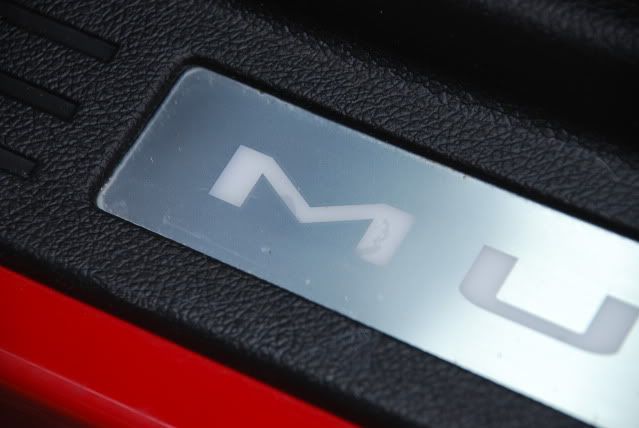
Also noted was the trip computer’s display was in blue rather than Ford’s nearly trademark green LED, many popular features remain but the loss of the fuel consumed heading was lamented. The trip computer and its menus, are manipulated with three buttons now located under the headlight switch, the “mood lighting” control is now buried in the digital menus making on the fly adjustments cumbersome. Another quick note about the mood lighting feature, is the lighted sill covers that greet you when the door is opened, nice touch but my example showed signs of moisture in the lettering, surely not a good sign.


Since you suffered this thing out so far I’ll sum up, overall this is a great Mustang, it has lots of great features and wide appeal. While this would not be my first choice in a Mustang to purchase, it does carry the brand well, I prefer a simpler more muscle oriented interior but creature comforts do sell cars. Reviewing my observations a keen observer will note most of my concerns are a number of small non-important issues that really don’t matter. That should be the main thing to take from this review, there are no serious problems with the car, and although the rear end may be ugly, it is a car worthy of the Mustang name.
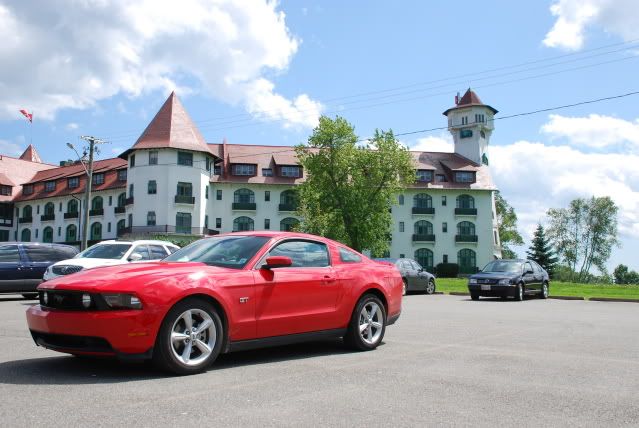
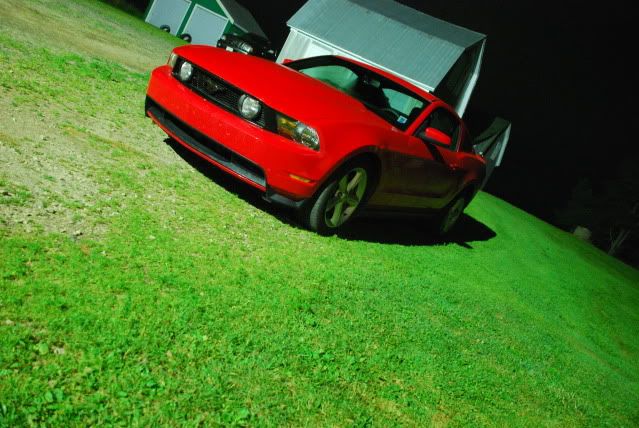


It was a blast to run this thing through the twists, turns and straights of all 2200km I covered in NS and NB, I honestly can’t think of a better rental car to do it with…

Tuesday, December 7, 2010

Back in the Grind : Looks Good on Paper & Living with a Pontiac

It’s been a week or so of steady driving since the last update, and I am pleased observe a successful repair of the Pontiac’s buggered fuel injector. We’ve seen a general return to normal with the GTP’s daily fuel consumption, and despite experiencing -20*C driving temperatures we are seeing about 23 US MPG under mixed driving conditions.

Gone are the stumble and rough idle conditions, so I think I’ve got this issue solved. I removed the #3 spark plug for inspection, and it has returned to burning normally, which is relief from the blackened soot that was scraped away each time before. This is good to note as I was quite worried that there was a spark related issue in conjunction with the fuel injector. The PCM is clear of codes and with the spark plug clean I’m ready to turn my attentions back to other projects.

Until the next interesting foible presents itself, take a look at the entire series if you haven’t already done so:

Thursday, December 2, 2010

UPDATE 2: Looks Good on Paper & Living with a Pontiac

They say no good deed goes unpunished, and the same applies for when installing new parts on this car.

On the demand of the OBD 2 system, the GTP recently received a brand new IAT sensor, the install was completely painless, taking mere minutes to finish the swap. With the check engine light cleared, I was hopeful we’d seen the end of our recent spate of fuel economy and drive-ability problems.

However, the very next night the car became totally un-drivable. While the Wife was finishing up her work commute, the engine began to stumble, and over last few kilometers home, it took to frantically flashing the CEL.
Since having a check engine light occur so often, we’d used up all of our “freebie” code readings at the dealer, and the service department was getting as sick of seeing the silver Pontiac roll in as we were of owning it. Knowing the dealer was 2 weeks behind schedule and that the vehicle wasn’t really driveable with a flashing CEL, I was left with some decisions to make.

The least expensive course of action was to purchase a code reader, pull the codes myself and make repairs as required. I have been loathe to purchase a OBD 2 code reader until now, because any of the other Ford vehicles I have in the household can easily be serviced with the Diablosport Predators I use for performance tuning. The 1995 GTS is an OBD 1 system and can be read with a simple paperclip jumper, so the GTP would be the only use I have for this somewhat costly tool. Reluctantly, I ran out that evening and obtained a scan tool.

With my $150 code reader in hand I was surprised to learn the #3 Injector circuit was stuck open and reported a “Generic Misfire”. Basically the injector had been stuck at 100% duty cycle under all throttle conditions, essentially flooding the cylinder with fuel. Chances were, this was the source of our poor fuel economy, misfire, and general engine related issues.

Next morning the GTP remained sullenly in the garage awaiting parts and I drove the Wife to and from work. Once parts dealers opened I began to price and source a single replacement injector.

There were two main options, new $255 each from NAPA or a refurbished unit from the same at $50. Checking the dealer for price comparison showed a $130 list for the refurbished injector. The easy choice was made to run with a refurb NAPA piece and return the old injector for our $10 core charge.

If I had the time, I'd have ordered a full set of 6 from ZZ Performance for less than one from the dealership. But seeing as I had to drive the wife to work once already, I elected to hurry up and get it fixed.
I had briefly considered and quickly discarded the idea of using a junkyard part for two reasons; firstly, a used injector may suffer from less than ideal fuel flow issues, and secondly, finding a GTP in the wreckers locally isn’t a very common thing.

So that evening the replacement was installed without issue. I am pleased to note the #3 injector is quite easy to access, if it were on the firewall side of the engine, I’m sure I’d be singing a much different tune. I reset the codes, started the car, and gladly observed smooth running with no return CEL. After a short road test, the on-board trip computer was reporting 31-32 MPG on the highway, quite good considering ambient temperatures and ethanol blended fuel.

I returned the car to daily driver duty and subsequently observed a large increase in fuel economy, regaining nearly 5 MPG in mixed City & Highway driving. So far there have been no new or returning engine related issues. As a footnote, this car has 170,000km’s or about 105,000 miles; I should sit down and write a laundry list of problems and breakages for easy reference.

After doing a recent oil change, next topic might be a discussion about Oil life monitors and my observations on that system.


Read the Entire Living with a Pontiac Series:

Looks Good on Paper:

UPDATE 1 –

UPDATE 2 –

Back in the Grind - Looks Good on Paper & Living with a Pontiac

Sunday, November 28, 2010

A case for Winter Tires

If you’re in the Northern hemisphere, it’s currently winter, generally cold, unpleasant, and sub-freezing temperatures. The world however, won’t come to grinding halt just for the sake of comfort, with that, most people get to experience winter travel.

Ice and snow can make something as mundane as a casual walk, into a tricky and dangerous endeavor, especially when you aren’t wearing the proper footwear. By extension, driving your car can be the same.

During each winter commute on our roadways, I often see the majority of my fellow motorists hopelessly spinning and sliding their way through the various turns and intersections I encounter. In all but the very worst of conditions I don’t seem to have that problem, why is that? This rhetorical question as to why my vehicle doesn’t magically defy the laws of friction is very simple, I’ll sum it up as; “The proper equipment for the proper job.”

In short, my secret is winter tires.

It should some as no surprise, but to many, the simple concept of winter tires is viewed with the stigma of “an additional expense” or “unnecessary”. I know many drivers consider a vehicle as a driving appliance, a simple method of conveyance, and many people want that to cost as little as possible.

However cutting corners when it comes to safety is not something I even like to consider.

This attitude is being adopted across Canada as more and more Provinces are making it mandatory to have winter tires for operation of a motor vehicle during snowy months. I for one, applaud this approach. Before you shout me down, follow my reasoning here:

Why are All-season tires unsuited for severe winter conditions, like those encountered in Canada?

There are a variety of reasons, but the easy ones to explain involve tread design and rubber composition.

Think of the difference between a smooth soled fashion shoe and a rugged hiking boot, which one would you trust to walk down that snowy hill? Fact is, the relatively tight and smooth tread of the All-season tire fills with snow very rapidly, which means you are now trying to stop and turn with the equivalent of a ski, offering little in the area of traction. A snow designed tread is more open and will self-clean while driving, giving the jagged edges of the siped tire a clean bite into snow and ice.

The tire compound is very important too, an All-season tire is designed to give, among other things, good fuel economy and long life. The easy way to do this is by using a “hard” compound of rubber, which will be resistant to wear during the heat of summer months. However during the colder months, the tire will become very hard and will not flex or conform to the road surface as well, in result your tire will slide along like a hockey puck. The snow tire will have a softer compound which would wear out quickly during summer, but during the cold months of winter it remains compliant and offers remarkably improved grip.

That is just a fraction of the theory involved, but moving beyond that lets actually look at the difference in stopping performance.

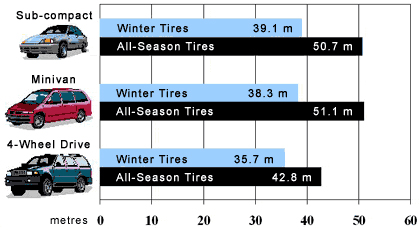
Stopping Distances Tested at 50km/h (31 MPH)


Test Conditions:
- -20°C with 3 to 5 cm of compacted snow and ice on asphalt surface
- Vehicles equipped with automatic transmission and anti-lock brakes
- Tests in 4-wheel drive vehicle conducted in all-wheel drive mode


*Fournier L., Comparative Evaluation of Performance of All-Season tires and Winter tires, Ministry of Transportation, Quebec, 2002.


As you can see the two of the most popular car types, mini-vans and compacts have the worst stopping distances, about 51 meters compared to larger heavier vehicles at 43 meters. Switching to the common standard unit of measure, a compact car equipped with Winter tires will stop 38 feet shorter than All Season tires, that is over 2.5 car lengths sooner. In a panic stop that is the difference between, before the obstructed intersection, or becoming part of the pile-up.

You’ll also note that 50km/h is not very fast at all, in many cases city roads can be zoned for speeds up to and including 70-80 km/h. Highways often reach posted limits of 110 km/h, as a safe practice you should reduce your driving speed for conditions, however this is not always the habit of some drivers. As such, the importance of winter tires for stopping and car control increases with driving speed.

-But I have ABS/TCS/etc.

While these modern driving aids are a great help, they are a support system for the driver and should not be relied on a substitute for good driving habits and proper equipment. ABS will actually post a longer stopping distance over a properly used non-ABS car, but ABS allows you to steer without locking the wheels. In low-traction conditions the ABS system will only apply as much brake force as it takes not to lock the wheel, with a set of All-Season hockey pucks, imagine how little braking action that takes.

Traction Control typically only assists during acceleration and it applies much like ABS. Most systems still allow some spin, so anything that enhances basic traction will help the TCS work correctly.

About wheel-spin, ever wonder why approaches to intersections are so slippery? It’s mainly a two-fold effect, one part is heat from stationary vehicles melting accumulated ice and snow every so slightly. The second part is the fresh ice/water mix is polished to a glass-like sheen by the All-Season equipped vehicles struggling for grip. This one-two combination is much like the effect of a Zamboni machine at a hockey rink, and the result is the exact same. A good winter tire will help you not contribute to the problem and allow you to better cope with conditions at that next intersection.

Another common thought is that winter tires are very expensive, and much like anything vehicle related, they can be, but not if you shop around. Some of the most inexpensive tires I’ve purchased have been winter tires, when the winter season approaches watch for sales and deep discounts. During a follow-up article I’ll discuss various tire options and buying tip to minimize costs.

When it all comes down to it, your car’s tires only touch the pavement with an area about the size of the palm of your hand, and when it comes down to stopping or turning, how would you like to do it? Like you’re in control, or like you’re riding a crazy carpet?

The choice is obvious for me.

Tuesday, November 23, 2010

UPDATE: Looks Good on Paper & Living with a Pontiac

Life with the silver car continues, it’s been nearly two years since the first article, and I thought it was time for a follow-up. Things don’t seem to get better with age when it comes to most cars and this one is no exception.

Minor irritations also continue, first in the way of a failed HVAC control, seems the fan speed controller will only function in settings 3, 4, 5, and OFF. This isn’t a big deal in the winter, since the GTP’s heater struggles to keep the windows frost free on any setting lower than “5”, but in the summer it makes adjustment of the A/C quite bothersome and noisy. Replacement of the resistor is around $50 and an afternoon under the dashboard fiddling with Torx screws. However, if the problem lies in the actual heater controls finding a replacement dual-zone climate control panel could be very expensive.

Also during the summer, we had the passenger side window motor refuse to work. None of the switches wanted to respond until the door was given a good slam, likely the motor has a dead spot or the window track had somehow jammed. As of late it hasn’t happened again.

Something I forgot to mention in the first article was this vehicle’s propensity to digest headlight and driving lamp bulbs. I am reminded of this since I replaced yet another just a week ago. On average since owning this car, we’ve replaced a full set of 4 bulbs every 8 months or so. They don’t all go at once, so you have to keep an eye on them.

Most recently the GTP’s usually reasonable fuel economy has dropped into the pits. Typically, mixed City/Highway driving would return a modest 23-25 US MPG, currently we’re seeing 19-21 US MPG. When doing purely highway travel observing 29-32 MPG was not uncommon, but after a post tune-up 1000 km trip a few weekends ago, the best I could muster was 25 MPG, the engaging the cruise control would drop that number to 23.5.

Around the same time, we noticed the significant drop in fuel economy, the wife also noted a rough idle characteristic at times. It was completely random, but when sitting at a stop light or similar situation, the engine speed would drop to 500-600rpm and shudder or miss. Since the car was running on the factory plugs and wires that were nearing their recommended change interval, I sourced and installed replacements. I had suspected that the symptoms were indicative of a spark related issue. Pulling the plugs seemed to support this as well, 5 out of 6 were burned open to a .070” gap and the number 2 cylinder was fouled with a dry, black soot.

After the tune-up, the fuel economy failed to change at all.

Yesterday the car finally decided to give a peek into the situation when a “Check Engine” light illuminated. I knew this may either indicate our problem or may simply be playing Chicken Little about the gas cap seal, like it traditionally does any time the temperatures get a little chill.

The GTP was taken by the dealership to have the codes pulled and they reported the IAT sensor was out of range. The Intake Air Temperature Sensor being on the fritz could certainly account for terrible economy and drive-ability issues. When the car was brought home, it had set the Check Engine Light again; I yanked the little sensor out from the inlet tract for a look. Visually it appeared fine, and since I didn’t have the specs to bench test the unit, I gave it a few shots of contact cleaner and re-installed it. After a bit of test driving, the problem didn’t go away so I resolved to purchase a new sensor.

Cost on the new sensor was about $30 and I’ll install it later today, hopefully this fixes the issue. I’ll also have a look at the #2 spark plug again to check for fouling, if so I figure one of the coils could be underperforming and needing replacement.

For the record the car has just over 100,000 miles at this time, and I’m continually disappointed with these electrical related failures. On a high note, we plan to retire this car and replace it with a Ford Mustang of some sort in summer of 2011. So far it’s been a pretty silly ride, stay tuned for more updates as they occur.

Read the Entire Living with a Pontiac Series:

Looks Good on Paper:

UPDATE 1 –

UPDATE 2 –

Back in the Grind - Looks Good on Paper & Living with a Pontiac

Wednesday, November 17, 2010

Tracking your Fuel consumption


Some time ago, I was looking around for a program that might keep better track of my gas mileage than the random pile of pay-at-the-pump receipts I'd been using. It didn't take long to come across a free online service that did everything I was after and more. Fuelly is a very simple system to use, simply create a login, build a "garage" of vehicles you wish to keep track of., and then log your fill-ups.

The Website is here: Fuelly | Share and Compare Your MPG

Logging a fill up can be done either with a trip meter reset at every fill, or by simply recording the odometer, however the system only works properly when you completely fill your tank. So obviously little $20 tank additions aren't going to work for you unless you keep a really detailed log.

Since I have 3 vehicles which are not known to be real fuel misers I decided it might be fun to keep an eye on what I can get out of them. That, and I like being a counterpoint to all the eco-friendly nonsense those sort of sites seem to attract. I quite enjoy disrupting the tickerbar:

So-and-So just got 56.7 MPG from their Prius

SomeOtherPerson just got 43.6 MPG from their Boring Honda

Darren5.0L just got 11.2 MPG from his SVT Lightning!

LOL

Somewhat surprisingly, owners of brands that are usually thought to be quite fuel efficient often report crappy (<20 MPG) mileage especially if it isn't a junker econobox model.
 
So maybe give fuelly a whirl and see what your vehicle can actually get for mileage under real driving conditions.

Sunday, November 7, 2010

Where have the Imports gone?

In the last decade, I believe we have witnessed the rise and decline of the Sport Compact Car.

The concept of doing more with less has been around for ages, but the rise of the 4 cylinder and other non-V8’s really came into the North American mainstream somewhere around the late 1990s. I suppose movies like the Fast & the Furious (1999) probably were a significant contributor to the pop-culture trend of vehicle modification, true Import purists (and anti-posers) usually shudder at the mention of the F&F series but it did draw in new blood to the hobby of vehicle modification.

I’ll make it known here and now that I am a domestic performance vehicle enthusiast, specifically Late-Model-Domestic-Muscle, but I’m open minded to cars in general, so don’t let that make you think I’m completely biased.

Years ago, when I bought my first car, a clunker 1988 Ford Escort EXP, the world of big exhaust tips and neon underglow was just starting to take off. At that time I thought you basically bought a vehicle and basically how it worked out of the box was what you got. This concept of performance modification (with a few exceptions) was completely alien to me.

In 2003, when I was able to insert myself into the performance hobby, I was quick to note the variety of “performance” vehicles cruising the streets, and as the new owner of a 1995 Mustang GTS it wasn’t lost that domestic performance seemed to be a minority.

I have no idea what the actual ratio was, but it seemed for every domestic performance car you might run across 7 Import “Tuner” cars, that is sport compacts with some degree of modification.

About those modifications,

After all of the hype behind the import tuner cars, I gave them a fair bit of respect, that is, until I actually got to run a few and began to question my perceptions. This is of course from the perspective of a 15 second stock Mustang running 16 & 17 second imports. I came to understand that the typical formula of a sport compact car was generally lightweight, front-wheel drive, four cylinder engines, and typically made less than 200 horsepower peak, and even less torque.  Commonly, most of these tuner cars had only rudimentary and sometimes dubious engine modifications, backed by eye-catching and sometimes counter-productive appearance modification.

Exempting the power adder guys or the very rare max-effort engine builds these cars were quickly considered “easy pickings” for those from my car demographic.

While these Tuner cars were not the fastest thing on the streets or strip, they did create and fill a huge market segment for young and young at heart buyers. Each Japanese manufacturer had at least one model or option catering to that group. The aftermarket was flooded with speed and appearance parts for nearly everything.

Things looked good for the trend of import racer and import showcar, but over the last few driving seasons I have seen a huge decline in Sport Compacts and the like.

So what happened, and where did they all go?

Reflectively, I think a number of things changed against the tuner crowd.

Firstly, as these cars became more numerous and popular, public awareness also increased, with it came additional police and legislative attention.  When under the microscope of the law and enforcement, it can really take the fun out of any hobby.

Secondly, many of the Japanese manufacturers seem to have abandoned this market, gone from the dealership lots are new models of the Celica, Talon/Eclipse, 240SX, Mazda Speed 3 and so on. The remaining Civic Si, 350Z, RX-8, Evo etc are not very cost effective cars to a young buyer.

Third, the rise of the Right-hand-drive. The recent glut of Japanese Domestic Market (JDM) cars to hit North America has really changed the face of Import performance and may have really affected the desirability of the North American counterparts.

Possibly a fourth consideration is the resurgence of the modern muscle car. I have seen a number of car enthusiasts that have switched from Import to Domestic muscle, to summarize them, it’s a matter of low cost and big performance. When you compare Domestic to Import new cars, I believe it’s a very valid consideration.

As much as I’ve heard the term “Ricer” thrown around and the mockery that follows, I think it’s rather unfortunate to see this backslide of the Sport Compact Car continue, because the loss of every “Tuner” car is potentially the loss of another car enthusiast.
So despite the general hatred of the buzzy resonated exhaust tip and the obvious work-in-progress primer of a new “body kit” I still think it’s a shame to see it go.

Saturday, October 30, 2010

Modern Performance Vehicles's K-Spec Drag Racing Program

08-26-2009

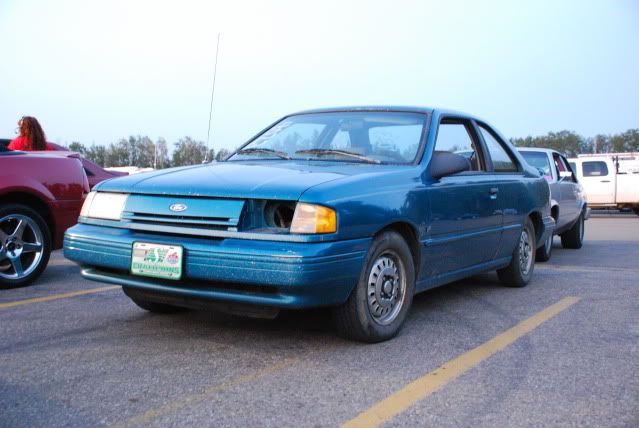
It’s green, it ain’t mean, it isn’t much to look at, and it certainly isn’t worth writing home about, but we’re doing it anyway. How’s that for an introduction to Modern Performance Vehicle’s idea for a silly project?

Behold Hotwheel’s kind donation to the MPV Kijiji Spec (That’s K-Spec!) drag program:

Shown with optional headlight delete
I suppose donation is the wrong term, something like “willing to go along with” or “be party to” works better. Anyway, Ford Motor Company’s wildly popular Tempo just got… …noticed again. Keeping in line with Hotwheel’s mantra of no matter how unsuitable, take everything down the strip, and Grand Touring Concept’s of anything can be hot-rodded, we bring you the K-SPEC drag program.

Taking a select (AKA running) example of the Ford Tempo, we obtained the fastest, most modern version, the top of the range, 1994 Tempo GL. We ensured it was equipped with nothing less than the potent (for a Tempo) 3.0L Vulcan V6, the consistent FLC-ATX 3-speed automatic transmission, 2 doors for lower curb weight, and just broken-in 280,000km mileage for peak potential. This car was sure to be a contender in this one-horse race.

The holy grail of Tempo performance, 3.0L V6!
Actually the entire thing above is total BS, Jesse had it lying around and we thought we’d try to drag it, and then (try to) make it faster. Footnote: (Without actually spending *any* money)

Before making something faster you have to establish a baseline, and on 8:05 PM, Car Number 4023 made it’s first of 5 passes at Edmonton’s Castrol Raceway Park.

Coiled and ready to... um what is it Tempos do? ... Maintain a steady beat?
 Hotwheels narrowed his eyes against to low setting sun, and prepared for what likely wouldn’t be one hell of a pass. The lights dropped and stomping the mild whirring noise pedal, he cut a .240 reaction time, the sixty foot was gone in a scant 2.833 seconds. With no hint of burning oil or coolant he eventually crossed the traps with a 18.188 @ 76.07 MPH. K-Spec drag racing, a much better past time to waiting in a doctor’s office, rather we had our baseline.

With his trademark enthusiasm, Jesse figured he could do better with colder air, so we waited a little and he made 4 more passes. The second last run was a surprising improvement to 17.618 @ 77.77 MPH, low 12’s were going to be easy! We’d already dropped over half a second and picked up 1.7 miles per hour with only telling Jesse to drive faster. Once we started modding the times should simply drop like the resale value of a Pontiac product, oh I did just go there…

Let’s talk horsepower here, you know real stuff. Fresh from the factory our updated Vulcan engine, with it’s reduced friction pistons, a strengthened block, roller camshaft and other changes, thumped out 141 Horsepower and 160 ft-lbs of Torque. This seasoned example was surely putting out more than the “detuned” factory trim so we had to see what we were working with.

To figure our horsepower out for certain, naturally the next step was to, you guessed it, the internet. (Who said dyno? Those things cost money!)

So, using the online ¼ mile drag calculator java program we can get some cheap-as-free results.

The drag calculator over at Dragtimes assured Flywheel horsepower rating or our money back, but we had to supply the numbers.

Quarter Mile times were 18.188 and 17.618.

Trap Speed supplied from the timeslips were 76.07 and 77.77MPH.

Let’s see, the infalliable wikipedia says that a Ford Tempo has a curb weight 2723 lb (1235 kg) and our Driver might weigh 175 lbs for a total of 2898 lbs

We also washed it to lower parasitic loss due to heat retention

With the numbers ready, the computer internet dyno began to spool up and everyone in the internet dyno cell was deafened as the display spat out our results:

Run #1 = 97.38 HP @ Flywheel
Run #2 = 105.57 HP @ Flywheel

Clearly the internet dyno must load heavier than a MD-600, but we can at least see the difference mod for mod, provided we always use the same internet dyno. Summarizing above, you can plainly see that telling Jesse to drive faster resulted in a whopping increase of 8.19 horsepower over stock, that friends, is massive.

Satisfied that we had a built on a Wednesday ringer, we planned for the next session.

Part 2:

09-03-2009

Back at the Grand Touring Concepts R&D facility (actually Darren’s garage which may have an adjustable wrench and a hammer) MPV 's goons set to work on extracting more horsepower from the wild Tempo.


Using some spare parts Hotwheel's has amassed, we set to work with a grinder mounted flapwheel to build a better inlet assembly. A high performance (junkyard) MAF was carefully milled (locked in a bench vise and attacked with a grinder) to accept a proven (again used) K&N conical Airfilter, we had specially chosen (of the 3 we had in a box) for this car. We retained the bottom part of the airbox assembly to act as a heat shield against the awesome under hood temps.

Grand Touring Concepts is kind of new to the FWD game but we understand this arrangement is called a "short-ram" intake, I guess it sounds better than exposed hot Air conical filter to folks not in the know. If my Dentist office reading of popular sport compact magazines indicated anything, we should behold outstanding gains from this modification.

So there it is; the GTC Exposed Short-Ram Conical Intake System (ESRCI) PN#X30V6 not on sale near you. Look for our booth at SEMA 2011.

As with all performance parts that "claim" to "add" horsepower, we needed to prove this part before K-spec marketing can ever begin. With that we're back to the strip...

On 7 August, Hotwheels was set to deliver a faster time with the newfound power provided by the experimental Grand Touring Concepts ESCRI. The K-spec Tempo made a grueling 7 passes, battling hot air temperatures to finalize gains made with the ESCRI. At 10:21pm a 17.640 @ 78.13 MPH was posted, followed by a 17.634 @ 78.17 MPH twenty minutes later. Late in the evening at 10:51 pm we had our best run; 17.607 @ 78.05 MPH, the ESRCI was a success, production can start immediately!

ESRCI Testing runs, available in HD:
http://www.youtube.com/watch?v=kjSpvMZgF40


Working on our promotional material we needed to visit the online dyno with our new results so our HP gains could be advertised with the product.

Using the same weight number as the last test, (we are very certain that Jesse did not starve himself for the sake of going faster) we awaited the results…

The best run worked out to 106.4 HP at the flywheel with the other 3 posted runs supporting the findings.

ESCRI 106.4 HP minus Stock 97.38 HP equals 9.02 BHP, which is nearly a solid 10 horsepower gain. This modification system is clearly worth more than the $300 USD plus shipping that our PR department plans on charging.


Here are our performance tables so far:

Stock (Booo!)
97.38 BHP - 18.188 @ 76.07 MPH

Waiting for cooler air (Super Tuning)
105.57 BHP - 17.618 @ 77.77 MPH

Super Tuning + GTC ESCRI (Super Awesome, tell your friends)
106.40 HP - 17.607 @ 78.05 MPH

Disclaimer:
(Actual testing of ESRCI with Super tuning versus Stock with Super tuning may result in a net gain of only 0.83 Horsepower…)


With these awesome successes, we know we have to keep pushing forward in order to keep ahead of the currently non-existent (and likely never existent) competition.

Setting the bar a notch higher, we'll see you next time.

Thursday, October 21, 2010

Not according to Plan Series 1

When my friend A_Gorman decided he wanted to delete the rather large hood scoop on his new 5.0L Mustang, he did what any reasonable person would do; Research.

Before
In Ford's manual on the 2011 Mustang, it indicated the the hood scoop is held on with 3M double-sided adhesive tape, so it should be easy. Out came the 10lb fishing line and cutting began, however, for some reason the line kept breaking and the scoop remained stubbornly in place.

Next, he did what any local Mustang owner I know does when faced with adversity, drop by Grand Touring Concepts and have their dedicated staff solve the problem.

Since the seal had already been broken, I decided to carry on where Andrew left off. I did ask the question "are you completely sure it's just 3M tape?" satisfied when told the Service Manual said so, I carried on.

After "sawing" the entire perimeter of tape and the scoop wouldn't let go I began to suspect my hunch had been right.

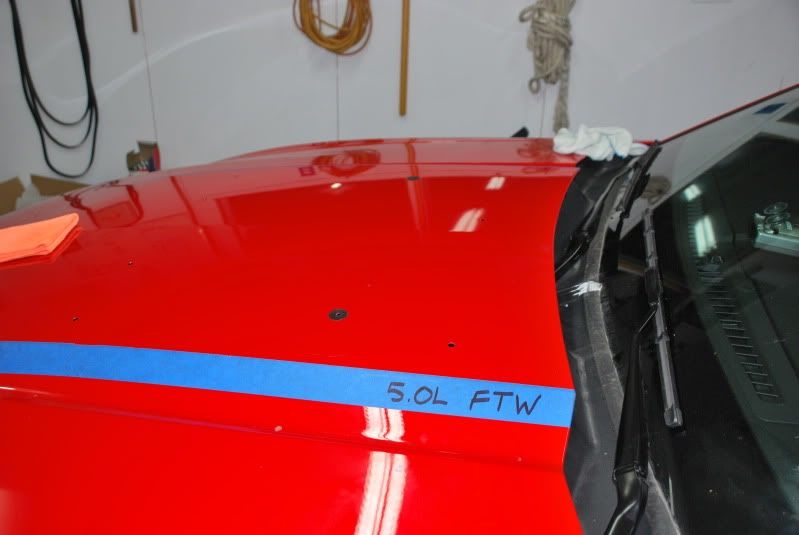
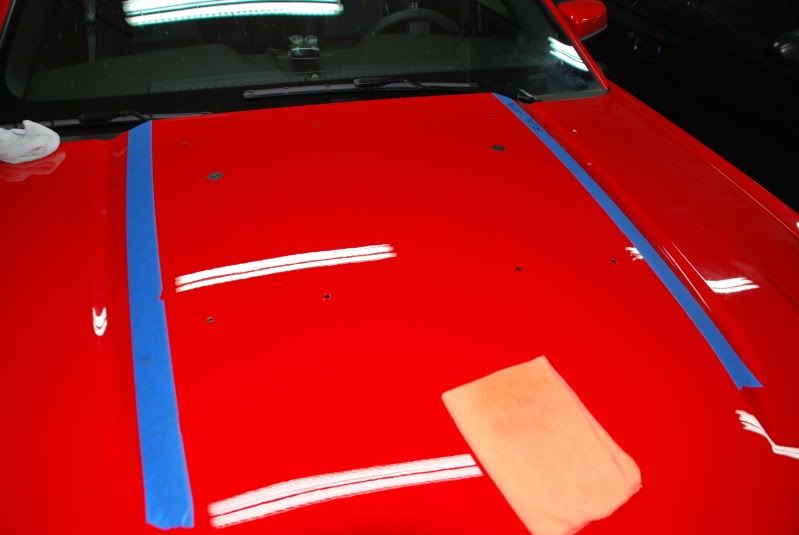
I removed the factory hood blanket and discovered what I had feared, four 10mm bolts. Knowing now that there were holes in the hood meant that the scoop had to stay on, but since we'd cut all of the 3M tape, it need to come off, be re-taped, and reinstalled.

Closing the hood, we wrestled the scoop from it's mount and discovered another set of 4 holes that had the scoop secured with one time use plugs and a locating dowel.

Grand Touring Concepts 2011 Mustang GT Hood Stripe Kit  
Of course these plugs broke upon tampering and new ones needed to be sourced on a Saturday evening. Using some locally sourced brand-X jobber units I fashioned new Grand Touring Concepts Hood Scoop Mounting Pins.

9 Holes! That's good round of drinking golf at the official course of GTC
We painstaking re-taped the scoop edges, did surface prep and re-installed it to it's original home.

Behold the finished product!
After!

Well at least I have some practice now. LOL

Tuesday, October 19, 2010

Western Motorsports "Vanquish'd" V12 Mustang

Back when the S197 was a fresh new platform, I became aware of the body-in-white project that had arrived at Western Motorsports in Calgary Alberta. This bare Mustang chassis was to be the subject of a build I had not before ever seen, nor have since.

This Mustang was to be built up as a SEMA show car, which would display the product, talents, and capabilities of the fellows at WMS. This would be no rolling 1:1 scale model, nor would it be a 5 mph capable trailer queen, this would be a full out driver that would be street legal, registered, and even autocrossed.

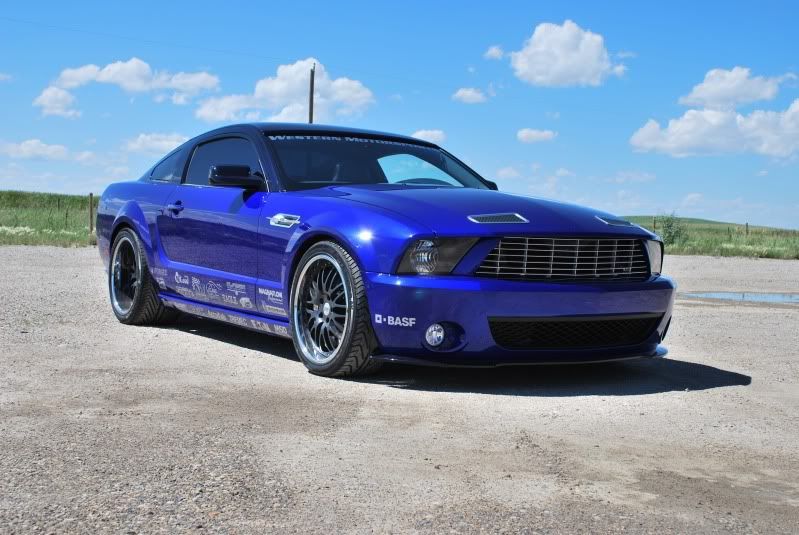
This is the WMS Vanquish’d Mustang.


In typical fashion when building something from scratch, you’d select only the best components available, and when you have years of Ford performance experience the sky’s the limit.

The Vanquish’d is no exception.


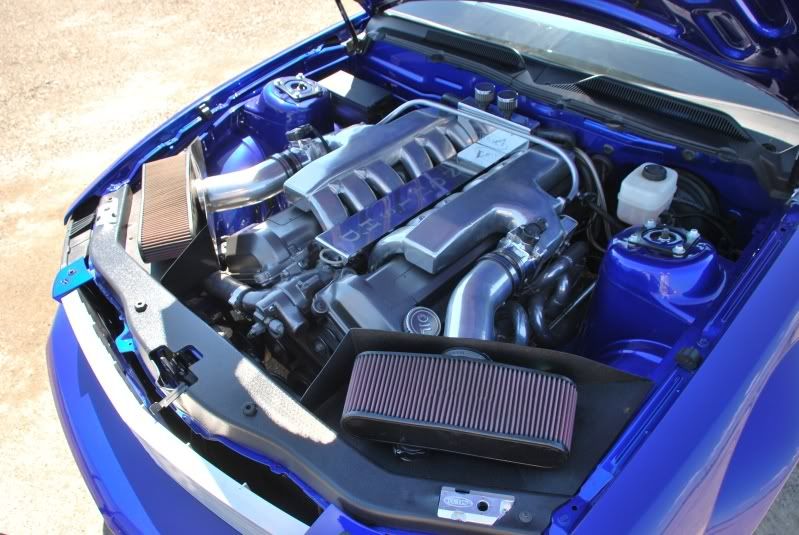
The heart of Vanquish’d, like many other builds, is in the engine, WMS selected and modified an Aston Martin Vanquish V12 powerplant which gives this car it’s name. This is no simple engine swap car, it was not “shoehorned” in with brute force and ignorance, but engineered to the finest detail, and finished to such a high standard that it rivals many supercars.
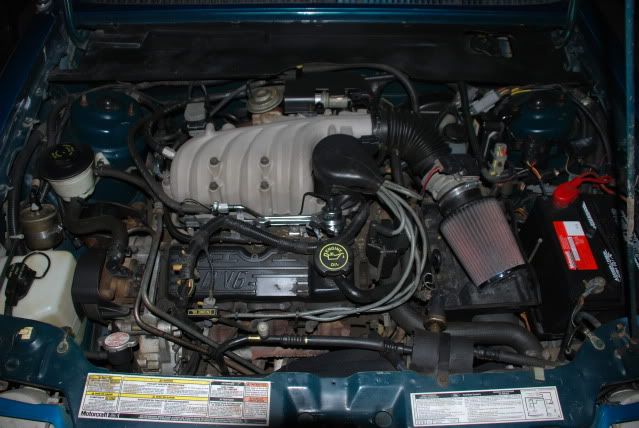

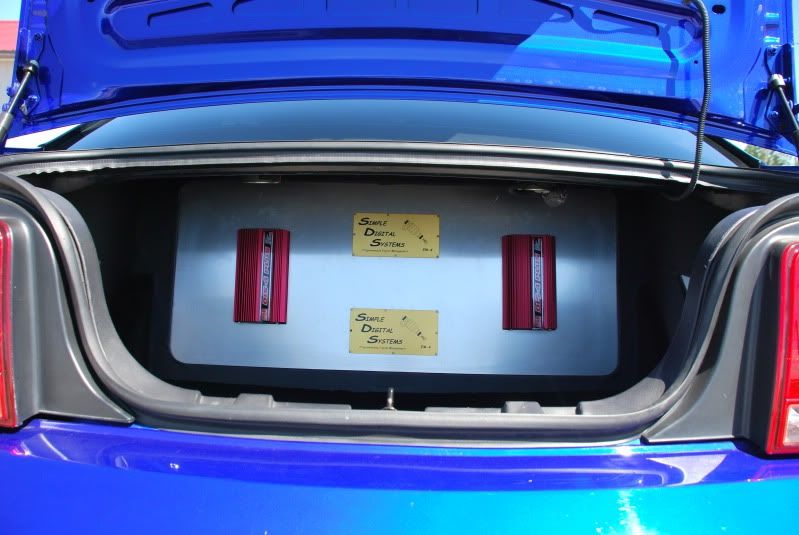
 Focusing on that potent V12 powerplant, which produced 520 horsepower stock, which has been reworked by Western Motorsports. It draws in a cool, dense air charge through dual WMS Velocity Cold Air Kits, dual Accufab Throttle Bodies and WMS Ported Manifolds. Fuel and spark control are by a pair of WMS/SDS standalone injection systems, with two MSD DIS 4 Ignition systems to ensure a fierce spark for complete burn of the fuel charge. Even the internals have been fortified with a 6.1L stroker, filled with JE pistons, Eagle rods and extensive Head work by WMS. No bolt was left untouched and upgraded to ARP Fasteners.


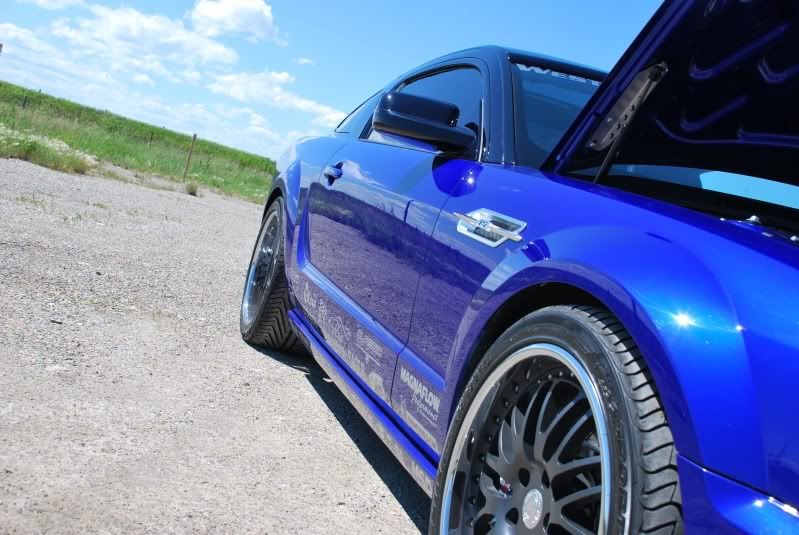
Spent exhaust gases are evacuated by a set of one-off WMS 6-2-1 Longtube Hedders, mated to a 3” off-road Magnflow “Magnapack” Exhaust, which provides a very distinctive tone throughout all throttle conditions.

The estimated 600 horsepower is transferred to the Tremec T56 transmission by a McLeod Street Twin clutch which motivates the 8.8” rear axle with its Eaton Detriot Trutrac differential and 3.73 gears.

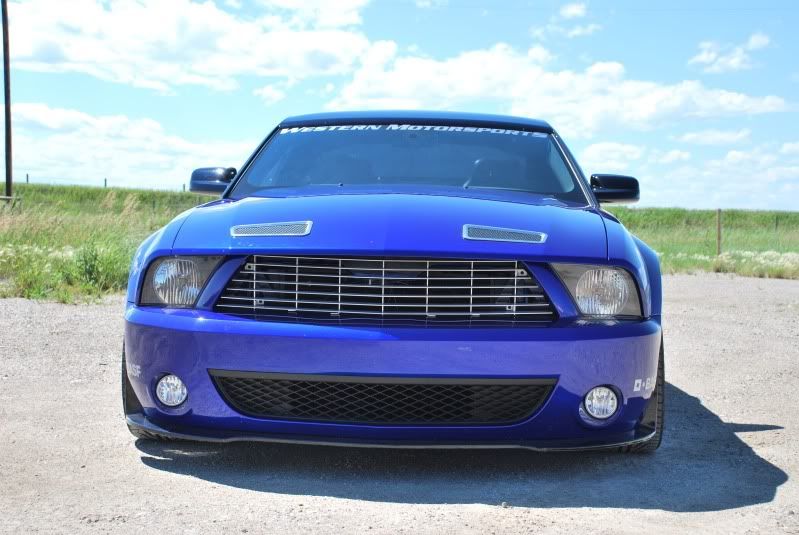
The exterior received just as much attention, but is so well executed that you really have to pick the trees from the forest to gain full respect for all of the custom touches. Complimenting the BASF R-M Carrizma Candy Blue Paint is a GT500 front fascia and splitter, a complex WMS Billet grille, and very trick custom billet vents from Colecraft.  


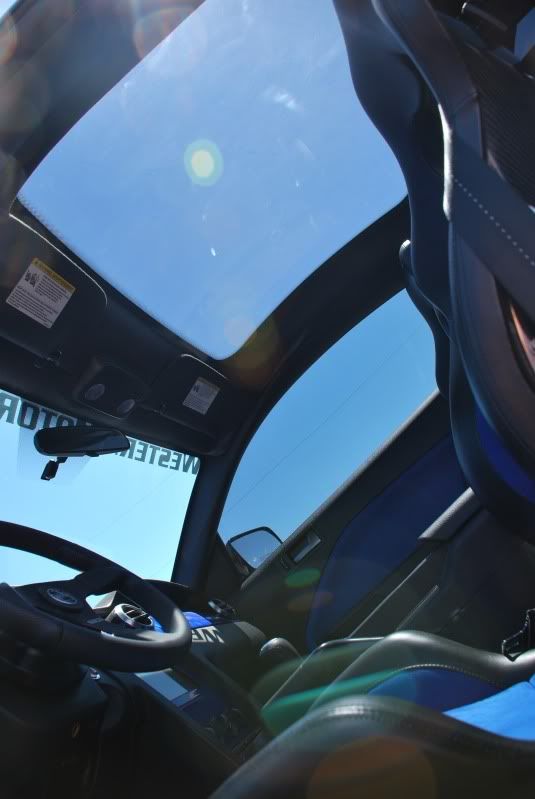
A Classic Design Concepts Glassback roof provides an open air feel with none of the structural losses of a canvas top. Across the rear decklid, nothing “spoils” the car’s profile and smooth lines that end in a CDC Trunk Blackout Panel.


Rolling stock is nothing less than iForged’s Essen line of wheels with 19 X 9” fronts and stunning 19 X 12” rears, wrapped with Michelin Pilot Sport Tires P275/35R19 and P345/30R19  front to back. Slowing down this show stopper is a set of Baer Extreme 14" 6 piston Brakes and KW Suspension Coilovers rounds out the handling aspects.


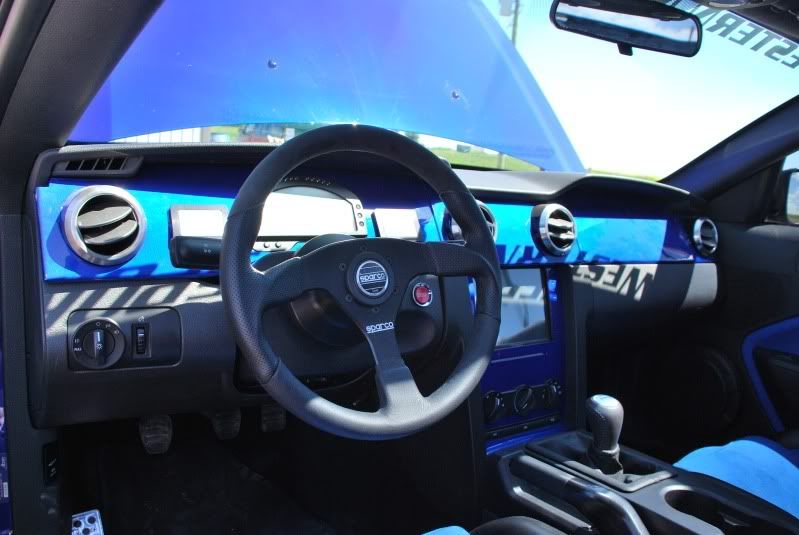
The interior treatment is a tasteful departure from many typically overdone show cars, you’ll find no giant subwoofers or dead-weight amplifiers here. The creed here is form meets function, from the Cobra Missano leather/alacantara Seats to the AiM Strata Dash & Datalogger. The ambient light from the CDC glassback really makes the blue accents pop from the black contrasts throughout the cockpit.


 After a experiencing this car a from the spectator standpoint, it was time to experience it as a passenger. The 4 point safety harnesses settled me into the supportive Cobra seat with absolute confidence, once buckled in, Shannon took to the road.

A with gentle slipping of the clutch and we were off. Once rolling, the throttles were cracked open and that V12's sweet exhaust note filled the cabin. The power came on with building aggression, forcing me into the lumbar, the engine climbed the digital tach quickly and effortlessly. Reaching the shift point the T56 was slotted into the next gear, and the power swelled again. The broken centerlines became closer together, next gear faster still, another shift and still pulling. Approaching another shift, we were on the brakes and nearly hanging against the harnesses as we were pulled back down to a stop. After a quick turnaround we were back at it again, the car making the perfect noise, unlike any Mustang I'd ever heard before.

After the test ride I was only able to mutter out; "That's damn cool."

After my visit for the photo and video shoot I decided to follow up with Shannon Wall and ask a few interview questions to better define the project.

 (Following Photos credited to Western Motorsports)

Darren5.0L – “If you were to have a mission statement for this project what would it be? Or more plainly, why did you guys build this car, and why did you select the parts you did?”

Shannon – “The project was motivated by a few circumstances; We had the Aston Martin V12, we’d bought a few of them 'cause it's a really cool engine. We’d always liked Aston Martins and that’s about a close as we’re going to get to having one. It is also Ford's most exotic engine and really is built by Ford, it’s even listed in the Ford Racing catalog under engine specs for those who don't believe.  When the 2005 Mustang was unveiled we thought that would be a perfect chassis to put it in so we put together a plan for a SEMA project to show off what can be done with a ground up build of one of these cars."


Darren5.0L – “ Did you run into any snags along the build and describe how they were resolved?”

Shannon – “I'm sure there were many snags along the way...  in typical hot rodder fashion though we just had to get creative, keep working and get around it.  The SEMA schedule did add some stress to it all and there were lots of last minute fixes.  I do remember polishing the intake scoops in the hotel parking lot in Vegas and installing them in the trailer!  Really though it all worked very well, engine fits in quite nicely and the miles of wiring all worked as planned - it fired right up.  One of the more challenging and tedious parts of the project would be the hedders, a couple days of fitting, cutting and welding.”


Darren5.0L – “What kind of public events has this car attended and any accomplishments or awards?”

Shannon – “Of course the car made it's debut at the SEMA show placed in the Mustang Dyno booth where it caught a lot of attention. While there, one of our more interesting conversations was with some Ford exec's who were quite concerned where we got the Aston Martin engine. It has been at 2007 World of Wheels and won Best Engine, Street Achievement and Best in Class.  Also been to the International Mustang Meet and local (Calgary) Mustang club events.”


Darren5.0L – “Who are all of the people involved in the build, and anyone who you have special thanks to?”

Shannon - “Main builders were myself, Dave Lockwood and Rudy VanVeenendaal. Paint was done by Dwayne Flodel here in Calgary.  A special thanks to our families for putting up with our long working hours."

Darren5.0L – Do you guys have any future plans for this project or coming ones?

Shannon – “The Vanquish'd project is complete now and we are actually thinking about selling it now as we are starting a new project with a 2011 Mustang 5.0."

Specifications & Modifications:

Engine
6.1L Aston Martin V12 DOHC 48V
WMS Ported Heads
WMS Ported Intake Manifolds
JE Pistons
Eagle Rods
Dual WMS Velocity Cold Air Intakes
Dual Accufab Throttle Bodies

WMS Custom 6-2-1 Longtube Hedders
Magnaflow 3" Offroad X pipe
Magnaflow Magnapack Exhaust

WMS/SDS Engine Management
MSD DIS 4 Ignition
WMS Wideband O2 Sensors

ARP Engine Fasteners
 
Driveline
Tremec T-56 6-speed Manual Transmission
Mcleod Street Twin clutch
Eaton Detroit TruTrac Differential
3.73:1 Final Drive
 
Suspension
KW Suspension Coilovers Front & Rear
Baer Extreme 14" 6 piston Brakes
iForged 19 X 9" Essen Wheels Front
iFroged 19 X 12" Essen Wheels Rear
P275/35R19 Michelin Pilot Sport Tires Front
P345/30R19 Michelin Pilot Sport Tires Rear
 
Appearance
BASF R-M Carrizma Candy Blue Paint
Classic Design Concepts Glassback Roof
Classic Design Concepts Hood Struts
Classic Design Concepts Rear Blackout Panel
Cobra Missano Leather & Alcantra Seats
AiM Strada Dash/Datalogger
Colecraft Billet Custom Fender and Hood Vents
WMS Custom Aluminum Grille
GT500 Fasica & splitter, fog lamps,


For more information about this project or Ford performance modification please visit www.wmsracing.com

From the author: I would like to extend my thanks to Shannon, Rudy and Joel at WMS for having me at their shop and taking the time to share this car with the Mustang world, and Robb for his photography work.

Thanks for Reading,
Darren (5.0L) Lynch