Tuesday, October 19, 2010

Western Motorsports "Vanquish'd" V12 Mustang

Back when the S197 was a fresh new platform, I became aware of the body-in-white project that had arrived at Western Motorsports in Calgary Alberta. This bare Mustang chassis was to be the subject of a build I had not before ever seen, nor have since.

This Mustang was to be built up as a SEMA show car, which would display the product, talents, and capabilities of the fellows at WMS. This would be no rolling 1:1 scale model, nor would it be a 5 mph capable trailer queen, this would be a full out driver that would be street legal, registered, and even autocrossed.

This is the WMS Vanquish’d Mustang.
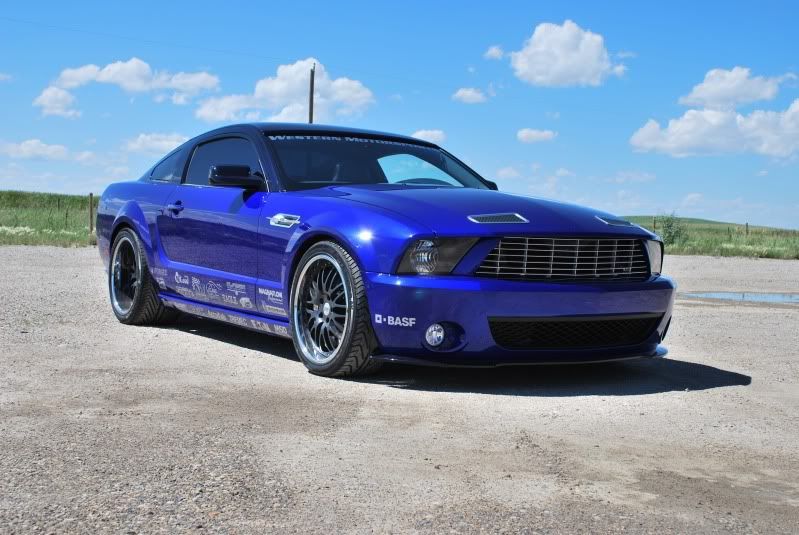

In typical fashion when building something from scratch, you’d select only the best components available, and when you have years of Ford performance experience the sky’s the limit.

The Vanquish’d is no exception.

The heart of Vanquish’d, like many other builds, is in the engine, WMS selected and modified an Aston Martin Vanquish V12 powerplant which gives this car it’s name. This is no simple engine swap car, it was not “shoehorned” in with brute force and ignorance, but engineered to the finest detail, and finished to such a high standard that it rivals many supercars.
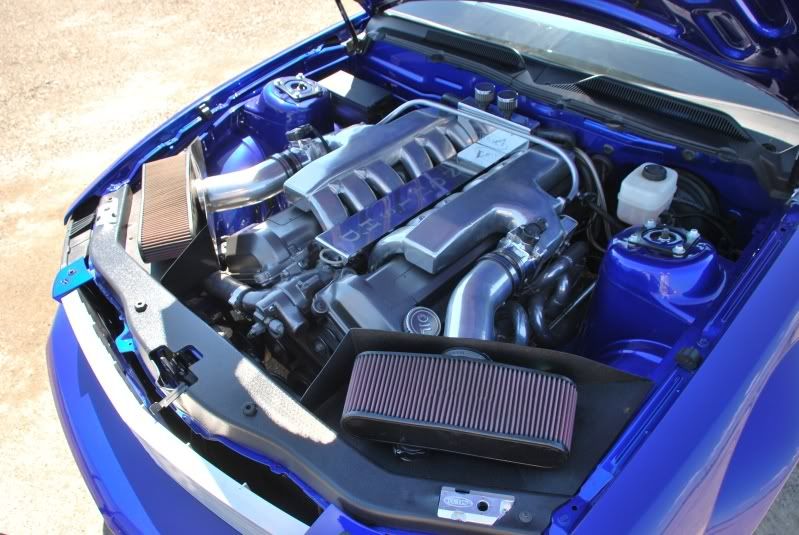

 Focusing on that potent V12 powerplant, which produced 520 horsepower stock, which has been reworked by Western Motorsports. It draws in a cool, dense air charge through dual WMS Velocity Cold Air Kits, dual Accufab Throttle Bodies and WMS Ported Manifolds. Fuel and spark control are by a pair of WMS/SDS standalone injection systems, with two MSD DIS 4 Ignition systems to ensure a fierce spark for complete burn of the fuel charge. Even the internals have been fortified with a 6.1L stroker, filled with JE pistons, Eagle rods and extensive Head work by WMS. No bolt was left untouched and upgraded to ARP Fasteners.
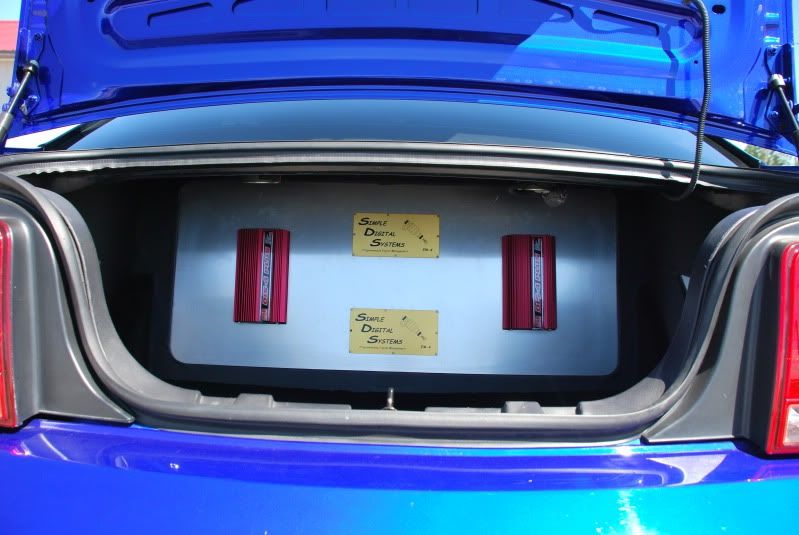

Spent exhaust gases are evacuated by a set of one-off WMS 6-2-1 Longtube Hedders, mated to a 3” off-road Magnflow “Magnapack” Exhaust, which provides a very distinctive tone throughout all throttle conditions.

The estimated 600 horsepower is transferred to the Tremec T56 transmission by a McLeod Street Twin clutch which motivates the 8.8” rear axle with its Eaton Detriot Trutrac differential and 3.73 gears.

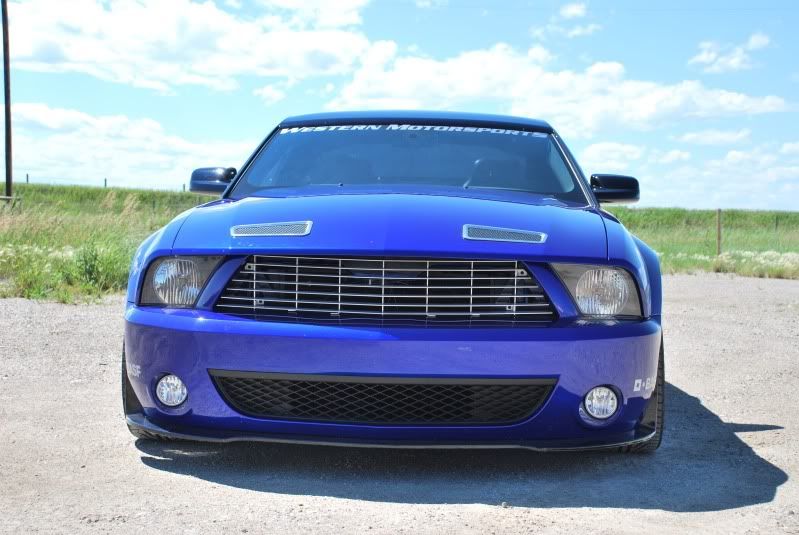
The exterior received just as much attention, but is so well executed that you really have to pick the trees from the forest to gain full respect for all of the custom touches. Complimenting the BASF R-M Carrizma Candy Blue Paint is a GT500 front fascia and splitter, a complex WMS Billet grille, and very trick custom billet vents from Colecraft.  
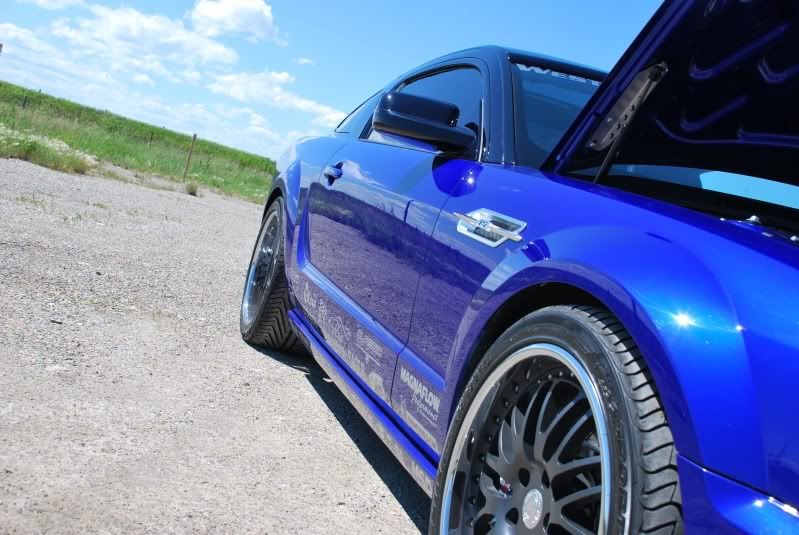

A Classic Design Concepts Glassback roof provides an open air feel with none of the structural losses of a canvas top. Across the rear decklid, nothing “spoils” the car’s profile and smooth lines that end in a CDC Trunk Blackout Panel.


Rolling stock is nothing less than iForged’s Essen line of wheels with 19 X 9” fronts and stunning 19 X 12” rears, wrapped with Michelin Pilot Sport Tires P275/35R19 and P345/30R19  front to back. Slowing down this show stopper is a set of Baer Extreme 14" 6 piston Brakes and KW Suspension Coilovers rounds out the handling aspects.
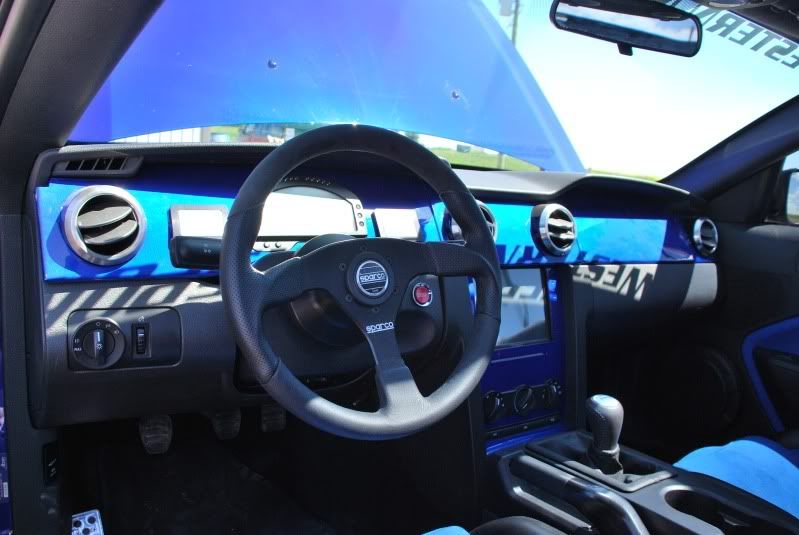

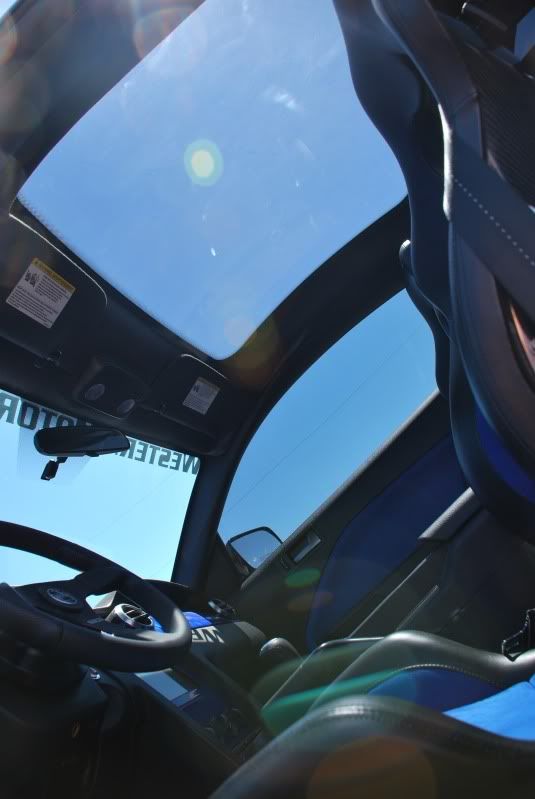
The interior treatment is a tasteful departure from many typically overdone show cars, you’ll find no giant subwoofers or dead-weight amplifiers here. The creed here is form meets function, from the Cobra Missano leather/alacantara Seats to the AiM Strata Dash & Datalogger. The ambient light from the CDC glassback really makes the blue accents pop from the black contrasts throughout the cockpit.


 After a experiencing this car a from the spectator standpoint, it was time to experience it as a passenger. The 4 point safety harnesses settled me into the supportive Cobra seat with absolute confidence, once buckled in, Shannon took to the road.

A with gentle slipping of the clutch and we were off. Once rolling, the throttles were cracked open and that V12's sweet exhaust note filled the cabin. The power came on with building aggression, forcing me into the lumbar, the engine climbed the digital tach quickly and effortlessly. Reaching the shift point the T56 was slotted into the next gear, and the power swelled again. The broken centerlines became closer together, next gear faster still, another shift and still pulling. Approaching another shift, we were on the brakes and nearly hanging against the harnesses as we were pulled back down to a stop. After a quick turnaround we were back at it again, the car making the perfect noise, unlike any Mustang I'd ever heard before.

After the test ride I was only able to mutter out; "That's damn cool."
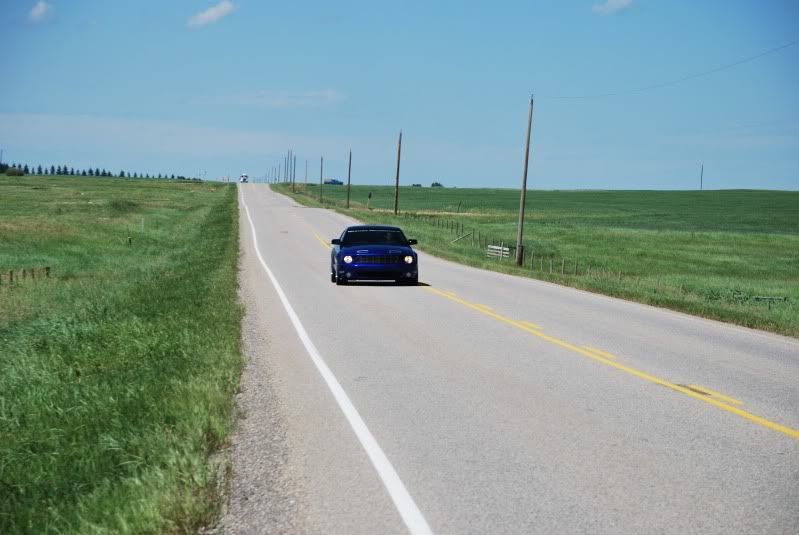
After my visit for the photo and video shoot I decided to follow up with Shannon Wall and ask a few interview questions to better define the project.

 (Following Photos credited to Western Motorsports)

Darren5.0L – “If you were to have a mission statement for this project what would it be? Or more plainly, why did you guys build this car, and why did you select the parts you did?”

Shannon – “The project was motivated by a few circumstances; We had the Aston Martin V12, we’d bought a few of them 'cause it's a really cool engine. We’d always liked Aston Martins and that’s about a close as we’re going to get to having one. It is also Ford's most exotic engine and really is built by Ford, it’s even listed in the Ford Racing catalog under engine specs for those who don't believe.  When the 2005 Mustang was unveiled we thought that would be a perfect chassis to put it in so we put together a plan for a SEMA project to show off what can be done with a ground up build of one of these cars."


Darren5.0L – “ Did you run into any snags along the build and describe how they were resolved?”

Shannon – “I'm sure there were many snags along the way...  in typical hot rodder fashion though we just had to get creative, keep working and get around it.  The SEMA schedule did add some stress to it all and there were lots of last minute fixes.  I do remember polishing the intake scoops in the hotel parking lot in Vegas and installing them in the trailer!  Really though it all worked very well, engine fits in quite nicely and the miles of wiring all worked as planned - it fired right up.  One of the more challenging and tedious parts of the project would be the hedders, a couple days of fitting, cutting and welding.”


Darren5.0L – “What kind of public events has this car attended and any accomplishments or awards?”

Shannon – “Of course the car made it's debut at the SEMA show placed in the Mustang Dyno booth where it caught a lot of attention. While there, one of our more interesting conversations was with some Ford exec's who were quite concerned where we got the Aston Martin engine. It has been at 2007 World of Wheels and won Best Engine, Street Achievement and Best in Class.  Also been to the International Mustang Meet and local (Calgary) Mustang club events.”


Darren5.0L – “Who are all of the people involved in the build, and anyone who you have special thanks to?”

Shannon - “Main builders were myself, Dave Lockwood and Rudy VanVeenendaal. Paint was done by Dwayne Flodel here in Calgary.  A special thanks to our families for putting up with our long working hours."

Darren5.0L – Do you guys have any future plans for this project or coming ones?

Shannon – “The Vanquish'd project is complete now and we are actually thinking about selling it now as we are starting a new project with a 2011 Mustang 5.0."

Specifications & Modifications:

Engine
6.1L Aston Martin V12 DOHC 48V
WMS Ported Heads
WMS Ported Intake Manifolds
JE Pistons
Eagle Rods
Dual WMS Velocity Cold Air Intakes
Dual Accufab Throttle Bodies

WMS Custom 6-2-1 Longtube Hedders
Magnaflow 3" Offroad X pipe
Magnaflow Magnapack Exhaust

WMS/SDS Engine Management
MSD DIS 4 Ignition
WMS Wideband O2 Sensors

ARP Engine Fasteners
 
Driveline
Tremec T-56 6-speed Manual Transmission
Mcleod Street Twin clutch
Eaton Detroit TruTrac Differential
3.73:1 Final Drive
 
Suspension
KW Suspension Coilovers Front & Rear
Baer Extreme 14" 6 piston Brakes
iForged 19 X 9" Essen Wheels Front
iFroged 19 X 12" Essen Wheels Rear
P275/35R19 Michelin Pilot Sport Tires Front
P345/30R19 Michelin Pilot Sport Tires Rear
 
Appearance
BASF R-M Carrizma Candy Blue Paint
Classic Design Concepts Glassback Roof
Classic Design Concepts Hood Struts
Classic Design Concepts Rear Blackout Panel
Cobra Missano Leather & Alcantra Seats
AiM Strada Dash/Datalogger
Colecraft Billet Custom Fender and Hood Vents
WMS Custom Aluminum Grille
GT500 Fasica & splitter, fog lamps,


For more information about this project or Ford performance modification please visit www.wmsracing.com

From the author: I would like to extend my thanks to Shannon, Rudy and Joel at WMS for having me at their shop and taking the time to share this car with the Mustang world, and Robb for his photography work.

Thanks for Reading,
Darren (5.0L) Lynch

Monday, October 18, 2010

Day to Day Living with a Kenne Bell 2.2L Supercharger, Season 1

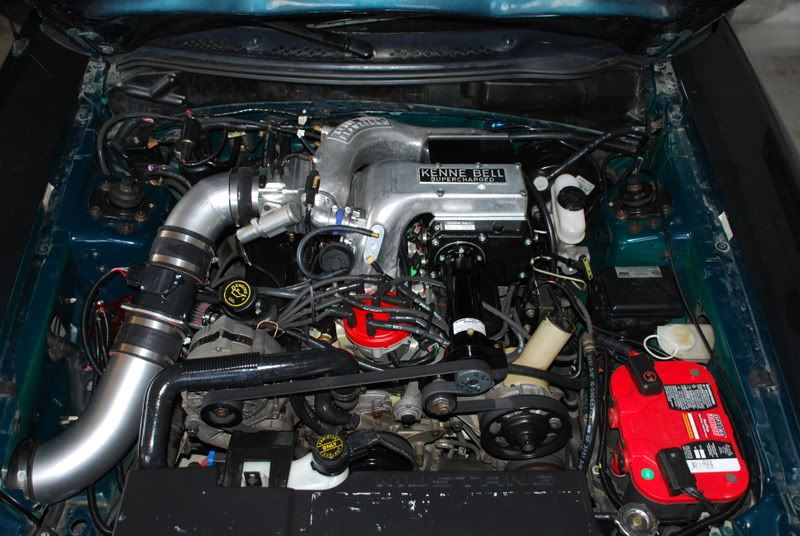
This is intended to be a bit of an observational log and performance dairy of my 1995 Mustang GTS equipped with a Kenne Bell 2.2L Flowzilla Supercharger.


First and foremost; I am not a qualified mechanic nor do I have any formal automotive training, in fact I don’t even hold a degree. (gasp!) This however does not mean I am unskilled and most certainly not inexperienced. Further, I hold no affiliation with Kenne Bell other than I have purchased and installed one of their supercharger kits, for my own personal use.

While I can attempt to outline my experiences with this supercharger, and answer specific questions pertaining to how I did things, I cannot answer technical questions about the Supercharger itself. Those specific questions are best suited to the qualified staff at www.kennebell.net

For anyone who has not read the install, it can be found posted on a variety of online forums, one such copy is listed here:


To completely sum up the entire document for the impatient I’ll begin with the end:

Conclusion:

After the first season of use, I am quite happy with my purchase. I have experienced no mechanical failures, performance shortfalls, or problems. I have noticed and remarked about Kenne Bell’s rapidly improving customer support, and communication. I would purchase this product again without hesitation.


Thanks for reading,

Darren (5.0L) Lynch

Onwards to the meat and potatoes of the document.

The foundation of this install is well accounted for in the install thread, but for the basics here it is:

1995 Mustang GTS 5.0L - 5 Speed – 3.55 Gears

Factory short block had 182,000km’s (114,000 miles approx) when the supercharger was installed.

Trickflow TFS heads - Factory camshaft – 1.6 Scorpion Rockers

Long-tube Headers – Off-road Midpipe – SVO Side Exit Exhaust

Ported GT40 Intake Manifold – 75mm Throttle Body – 90mm Lightning MAF – Custom fender well Cold Air Intake Tract.

42lb/hr Ford Racing Injectors – Walbro 255 L/Hr Fuel Pump - Factory Fuel Pressure Regulator and Rail.

Professionally Tuned using a TwEECer R/T – Mallory Hy-Fire 6A Ignition – Crane Fireball 2 Coil – 1 Step Colder plugs 0.035” gap.

Kenne Bell 2.2L “Blowzilla” Twin-screw Supercharger, GT40 Lower Intake manifold, 90mm Flowzilla Inlet, Integral bypass. Pullies for 6, 10, 14, and 18 lbs of boost.

That should about cover it for parts pertaining to the engine side of things.


The overall intent of the project was to end up a balanced car, that could give a decent account of itself on a road course, drag strip, and hooliganize the street where it would serve most of its duties. In the end, I believe this was completed to my satisfaction, but with any modification there are things that I wish to further hone.

Care and Feeding:
Fairly basic here, always ensure the supercharger (henceforth also referred to as the blower, and other slang) oil is within the specified levels, changed as directed and good quality fuel is used. Aside from that it’s pretty like any other moving part on an engine, inspect obvious problems should they occur.

As is important with any performance vehicle, good fuel is a must, and my car became very sensitive to “bad” fuel. During my first major road test with the supercharger, I found myself in a little town called Creston, British Colombia. While I had no problem finding good fuel on my trip in, it became necessary to fuel up to begin my trip home. (1,000 miles round trip) There were only a handful of stations there, so I picked the Esso with a cluster of sport bikes fueling from the premium pump. (91 octane) Within few miles from the station I had knocking and pinging at the first touch of boost, certainly alarming. One feature I had programmed into the TwEECer was a few different WOT spark tables, for adjustments on the fly. I had 17, 15 and 13 (limp home) degree tables for different situations. Usually I could run the 17 degree tune at 11 psi without issue, sometimes if it was hot out I would need to use the 15 degree map, never had I needed the 13 degree one until now.

So for the next 200km I climbed a mountain range and stayed out of boost doing so, (more on that bypass valve later) not the fun romp one usually has in hilly country.
My next stop was at a Chevron gas station, 94 octane and a bottle of octane boost later; I was breathing a sigh of relief as the car was able to run 17 degrees again.

I almost wonder if the Esso station had 87 octane filled in the premium tank, and I also wonder how the guys on the sport bikes got on…

Lessons Learned (Fuel):

1. Always use the best fuel available, from a high volume station.
2. It may be handy to keep a bottle of reputable octane boost in the trunk. (KB recommends NOS Race Formula)
3. Being able to adapt your timing tables on the fly might also be a good capability to have.
4. Having a Vacuum/Boost gauge can help you anticipate and avoid part throttle boost when having problems with poor fuel.
5. The bypass system for the Flowzilla is certainly worth the purchase when experiencing these problems.

Cooling;

Something I also observed on that trip related to cooling of the engine. Until that trip, the car had been equipped with a March under drive pulley set, which as you may know “frees up” existing horsepower by turning accessories like the water pump at a slower speed. I had not experienced any major problems with this arrangement until I unluckily found myself wedged in bumper-to-bumper traffic anchored to Calgary’s Deerfoot trail. During this 45 minute torture test, the temperature began to creep steadily toward the ‘H” side of the gauge, while Ford factory gauges are not very accurate, the air temp from the heater confirmed my fears. In the end I was able to push through the gridlock without overheating and owe the “heater core as a second radiator” trick and my electric fan for the success.

In preparation for my next big trip I re-installed the factory pulley kit and coolant temps were completely manageable from then on.

Another footnote is that I have been using a 180 degree thermostat, which is significant because Kenne Bell supplies and insists on a 160 degree unit. My choice to use a 180 degree T-stat came after careful consideration and discussion with local racers and tuners. Based on my location, (Edmonton, Alberta Canada) which is somewhat more northern than California where Kenne Bell is located, experience has found that since our summers rarely see daytime high of greater than 95*F a 160 thermostat usually causes problems with open/closed loop switching. While I do not advocate using a 180 degree thermostat for all users, it may be a solution if you have problems. Should cooling have continued to be an issue, the 160 T-stat was ready on the shelf.

Lessons Learned (Cooling)

1. Monitoring cooling problems is best done with an accurate gauge; a reputable aftermarket unit from your preferred company should do the trick.
2. Underdrive pulleys are probably not a great idea as they reduce water pump speed at idle, where you need the circulation most This may be mitigated with the use of the Kenne Bell supplied 160 degree thermostat.

Further about the March pulley kit and boost levels, I had been running a crank to pulley ratio which should have generated 10 psi, but I had been seeing 11 psi on the gauge. I suspect that March’s crank pulley is a little smaller than Kenne Bell’s literature assesses, and may over-spin the blower somewhat more than you plan. For me this condition went away once I switched back to the stock lower pulley and ordered a matching 10 psi upper pulley.

3. In a pinch, turning the heater to full-on and fan speed to high, you can get a marginal cooling increase at cost to passenger discomfort. Remember, passengers are replaceable but engine tear-downs are time consuming.

The Big Trip;

After logging over 1000 miles on the combo, I decided it was reliable enough for a more ambitious long distance run. The plan was to attend a large muscle car show in Lethbridge, Alberta and from there run to Las Vegas and return. I figured why not use the GTS? This 4800 km round trip would certainly be an interesting go, provided everything went as planned. In short, it did.

I departed from Lethbridge after the Sunday car show had finished up, and found myself in Helena Montana about 5 hours later. Driving at the Interstate mandated 75 MPH really made the miles pass quickly, but considering I sat in the sun during the car show, I shut things down for the evening at 9 pm.

The next leg of the journey went across 5 states from Helena MT to Las Vegas NV in 10 hours of near constant driving. A little observation about the trip down was summed up in a forum post I had made upon my arrival:

Quote:
Originally Posted by Darren5.0L;
How about those inefficient parasitic Superchargers?

So far this entire trip I have averaged a terrible 26.5 US MPG, spending much of my journey a rather high elevation, 7500ft at one point, and 5000-6500 was rather common.

My worst MPG was 18.5 climbing some mountain in Montana, and beating on it through the twistys down the other side.

However I did see 29.3 from Pocatella Idaho to Salt Lake City Utah.

I just don't know what to do about this thing, my 1960's engine equipped with a inefficient power adder still hasn't burned a drop of oil, despite having over 185,000km's.
A bit of an inside joke among some friends dispelling the myths about how small displacement turbo cars are better than any V8 with a blower. Remember that bit earlier from the Creston trip about the boost bypass being awesome, that’s the secret to fuel economy here.

Boost Bypass

In the old days of Positive Displacement superchargers, the car was always in boost anytime the engine was running. This additional airflow requires appropriate amounts of fuel to run at a safe A/F ratio, compression heated the air charge, and it drew power from the engine.

Simple enough, but as technology progressed, the use of a simple vacuum actuated valve allows a car to run with almost a dual nature. Kind of like Mad Max’s Interceptor, without a complicated clutch type supercharger pulley.

Essentially in high vacuum conditions like idle and cruise, the bypass stays open. Even though the supercharger is spinning, it is nearly freewheeling, drawing less than 1/3 of a horsepower, generating nearly no additional heat, and requires really no extra fuel. The engine is just as fuel efficient as it would be without the blower.

On the demand of your right foot, (WOT, 0 inches Vacuum, or heavy load) the bypass snaps shut and since the supercharger is already spinning at speed, it generates full boost instantly. With very little practice it is very easy to decide with your right foot whether you want to be in boost or not. Of course once in boost all expected supercharger physics apply normally.

Once arriving in unfamiliar territory I was a little worried about the prospect of someone deciding to steal my car, considering its age, it would be fairly easy to make off with. Remembering one of the features of my TwEECer is when the "controller" is removed the computer reverts to whatever is programmed into position one (of five). To make use of this, I had built a "junk tune" that wouldn't allow the car to run, like a slightly oversized key fob, I pocketed the Tweecer controller whenever the car was left out of sight. Thankfully no one bothered the car or its contents during my travels.

While in Vegas car hit the strip (not the drags) for a few trips and was generally great, aside from the black interior and no-A/C.

It was mid-July, in the desert, and no air conditioning you ask? It was actually a little worse than that, I might add the not yet mentioned floor-warming MAC Longtube headers, nor my awesome 1995 Cobra R cowl hood.

I had arrived in Vegas around midnight on the second day, meaning I had crossed the hot spots of Arizona and Nevada after sundown, while it was a little humid from a bit of rain, no big deal. Five days later, my morning departure trip home would be something quite different.

I'd never much noticed it before but the longtubes did make the floor quite warm, enough that I ended up switching out to my "Las Vegas driving shoes" aka pool side flip-flops.

Then came the matter of the Air conditioning, you might be thinking it died trying to cool in the desert, but it never even had the chance, I had killed it months before. During build I was faced with a decision, stemming from servicing the spark plugs, a simple choice, pull the blower, or pull 1 bulky A/C line from the driver's side. I'm sure you can guess my obvious choice, plug accessibility for passenger comfort, I usually just ran the fresh air vents anyway, and so what's the loss?

It turns out that when the early '95 Cobra R race cars were being campaigned, there were driver complaints about the cowl hood extracting engine compartment air and superheating the driver's compartment. Ford then had the hood vents redesigned partway through the racing season, blocking one of the extractors. The very hood I had on my car was one of these later examples, but faced with the heat of my supercharged engine in the desert, my fresh air vents provided nothing but very, very, hot air.

For few hours it took to climb out of the desert of Nevada, through the mountains of Arizona and into relatively better conditions of Utah, things were a quite uncomfortable with the heat. For me it harkened back to times spent in a less friendly desert, only without having to wear body armor this time, for the wife however, this was entirely new and very unpleasant.

Considering the heat, and the multitude of vehicles gushing steam on the side of the road during my climb I was very concerned about the capabilities of my own vehicles cooling system. During the Creston trip I had cooling issues in Canada, so I hoped my switch back to standard pulleys would keep me from boiling over. Keeping out of boost and being careful allowed the radiator to maintain a safe coolant temperature and I made it home without incident.

In all it was a fantastic and exciting trip, the US Interstate system is a dream to drive on, and my car made the whole thing worthwhile.

So what happened in Season 2?

This;

Time for a TKO (Video)

Sunday, October 17, 2010

Not according to Plan Series 2

Yesterday Chris2006GT dropped by Grand Touring Concepts for a Steeda control arm install on his 2011 5.0L. The aim was to mitigate some of the inherent axle hop found with the factory arrangement.


Ford has made some notable changes since the the 2005-2009 (possibly 2010) 3 link.
  1. The lower arms are now a closed I-beam design made of stamped steel, opposed to the open C-channel and gusseted C-channel as found on the old GT and GT500 respectively.
     
  2. The new lower arms are much stronger torsionally, but still have a compliance bushing on the body mount.
     
  3. The upper arm has a very revised bracket which uses a huge 24mm main bolt which required nothing less than a Snap-on 650 ft-lb Impact to break torque.
     
  4. The gas tank "skid plate" no longer inhibits removal of the upper arm and mount as an assembly, therefore you can do easy bench servicing on the upper arm and mount.
     
  5. Most importantly the upper arm to upper arm bracket bolt has been significantly up-sized leading to my final point;


An upper control Arm designed for a 2005-2009 Mustang will not work on a 2011 5.0L Mustang GT (and possibly other models) so make sure you get the proper unit. The lowers fit fine and work without issue.

Just another fine day of removing an OEM part to put it right back in LOL.

Saturday, October 16, 2010

Dodge Omni GLH & GLHS series

Although many modern performance enthusiasts believe that the 1980’s were a dark unmentionable age for modern muscle, it isn’t entirely true. New and exciting things were being developed in the R&D departments of almost every single major manufacturer.

After the fuel crisis of the mid-70’s it was a wonder that anyone would be thinking about performance, but better performance and efficiency do go hand in hand. With the widespread application of now industry standard fuel injection, OEM’s were discovering that this previously underdeveloped technology had come into its own.

There is not one specific year that really can be isolated as the birth of modern muscle, but somewhere around the mid-80’s various cars, unusual cars, were being fielded at dealerships across the continent. In this chapter of the roots of modern performance, we take a closer look at a particular Dodge offering, the GLH and its bigger brother the Shelby GLHS.

Starting from it's most basic design the GLH was in essence a Dodge Omni, a squarish, 4 door FWD, with heavy European influences. Stemming from it’s Simca (Now Peugeot) parentage.


Released in 1978, the standard Omni was really no performance marvel, and barring the GLH model it would have never been worthy of note. Once production was stabilized, the Omni was powdered by the 2.2L engine famous in the K-Car, it produced about 93 horsepower, with peak torque of 122 lb-ft at only 3,200 rpm

For 1984 however, this changed, Performance and Racing legend, Carrol Shelby became interested in a special Omni project called "Coyote"

Renamed the GLH (Goes-Like-Hell) by Mr. Shelby, this sporty model featured a few upgrades which bumped the performance numbers to 110 bhp. This was accomplished through use of a unique camshaft, and milling the cylinder head 0.020" to increase compression. In the appearance department, a chrome valve cover was fitted while Mopar Direct Connection offered add-on ground effects kits. Performance was a tidy 17.2 in the quarter mile and 9.4 seconds in the 0-60 dash.

The very next year, the '84 model would be easily eclipsed by its turbocharged replacement. The 1985 GLH was a much more improved package; power was boosted to 146 BHP @ 5200 RPM and 170 BTQ @ 3600 RPM.

Looks improved with last year's Direct Connection body kit standard, a tape stripe package, and larger alloy wheels. A Garret turbocharger provided positive pressure and this engine assembly became widely known as the "Turbo I" series.
This adjusted the ¼ mile sprint to 16.2 and reduced 0-60 1.3 seconds, to 8.1

Not to rest on on success, 1986 brought in a even more aggressive model, the GLH-S (Goes-Like-Hell-Somemore) This vehicle would be the last development year of the GLH series, but it would be a great one.

Starting with engine performance, a turbocharged and intercooled 2.2L featured a boost friendly 8.5:1 compression ratio. At 12 pounds of boost it developed a whopping 175 BHP @ 5300 RPM and 175 BTQ at a tabletop flat 2200-4800 RPM range. The air-to-air intercooler is capable of shunting heat by 100°F while an optional oil-cooler could further extend open track capabilities.

Track manners were improved through use of Koni adjustable shocks and the addition of a stiffer front roll bar. Special edition Shelby “Centurion” wheels were wrapped with Goodyear Gatorback’s 205/50/15, that were halted by heavy-duty front discs, at 10.2 in and 8” drums in the rear. A factory installed roll bar was optional.

Interior and appearance were not thrown to the wayside either.
Additional lighting was supplied by Bosch driving lamps, while factory tint and blackout striping gave the car a look of business like menace. Black was the only offered paint color and all interiors were finished in grey. Custom high back seats ensured a stable driving position while heel-toe pedals allowed precise downshifts of the 5-speed manual.
Further interior refinements included a leather wrapped wheel and shifter, numbered Shelby dash plate, and 135 mph speedo with tachometer.

Final performance numbers were impressive for the little Shelby, it could do 0-60 in a stunning 6.50 seconds, with a 14.7 quarter-mile (@ 94 mph). Cornering was quite good, with a skid-pad measurement of .88g. Shelby Automobiles was able to advertise that “names like Porsche, Ferrari, Audi, and BMW all finish behind Carrol Shelby’s new Limited Edition GLH-S.”


So next time you see an 80’s Dodge econobox, give it a second glance, it may just go-like-hell.

Friday, October 15, 2010

It's all about Horsepower

Yesterday I was reading an article in a Mustang Monthly about a 1972 Mach and it raised the question that I have always asked about factory horsepower ratings.

The older Mustangs (and muscle cars in general) were advertised with, until recently, stratospheric and unsurpassed horsepower ratings, but why are the new cars equal to or faster than their higher rated HP predecessors?

Fast question, what was the fastest reported 1/4 mile time for a factory stock vintage Mustang?

A quick survey of google reports the 1971 BOSS 351 ran a 13.8, which is the quickest recorded of any of the '73 and older cars. Sorry no vintage numbers for the BOSS 429 and other very heavy hitters, but regardless the 1971 BOSS 351 was advertised at 330 BHP @ 5400 rpm. This car in street trim was reported to weigh about 3220 lbs.

Just another quick pull from the same site takes the 2005 Mustang GT through the traps at 13.5, a full 3 tenths faster than the BOSS. We all know that the S197 is a heavier platform than even the "big" 71-73 years, and I wouldn't be far off the mark with a 300lb difference. Further the 05 car was geared with 3.55 and a 5 speed transmission while the BOSS powered a close ratio 4 speed and 4.10 - 4.30 gears.

So a heavier car, with less horsepower runs faster than the vintage unit, cry foul? Think not.


Something between 1971 and 2005 had certainly changed in Factory horsepower reporting ratings, but anyone who as been in the performance game for awhile knows that this is no surprise. Enter the term SAE, the real focus of this article. The Society of Automotive Engineers (SAE) is; (from wikipedia)

"SAE's original purpose was to promote the use of standards in the nascent automobile industry (initially in the United States) and to promote the better interchange of ideas and expertise, in a similar manner to many other technical societies."

One area where a SAE exercised it's influence was a standardization of engine testing and reporting of results, this was done for very good reason. It would not take much for an engine producer to "skew" their horsepower results for interested purposes. Think about it, even today, Horsepower does sell cars, and if there were no standards of testing, then any marketing people worth employing would certainly report as much as possible. Not convinced that HP matters, take a look at the arguments of a Mustang Dyno vs a Dynojet online, people will always slap down the higher number reported and scoff at a lower one. After seeing the nonsense from that argument, imagine in a modern time if manufacturers were offering their own "certified" in house horsepower testing standards?

It would be difficult to make an apples to apples comparison between engines to say the least.


In the days of pre-SAE engine testing things were a bit muddy, read these wiki excerpts below:

"Brake horsepower
Brake horsepower (abbreviated bhp) is the measure of an engine's horsepower without the loss in power caused by the gearbox, differential, transfer case, or other drivetrain related losses. Brake horsepower is a standard measurement used by manufacturers to represent the horsepower developed at the crankshaft of an engine with it's "production" accessories. This is opposed to the older "gross" horsepower measurement taken with no drive accessories, as was the norm in the 1960's and 1970's. "Brake" refers to a device which was used to load an engine and hold it at a desired RPM. During testing, the output torque and rotational speed were measured to determine the "brake horsepower". Horsepower was originally measured and calculated by use of the indicator (a James Watt invention of the late 18th century), and later by means of a De Prony brake connected to the engine's output shaft. More recently, an engine dynamometer is used instead of a De Prony brake. The output delivered to the driving wheels is less than that obtainable at the engine's crankshaft."


Moving on wards we have the first example of SAE Horsepower:

"SAE gross horsepower
Prior to the 1972 model year, American automakers rated and advertised their engines in brake horsepower (bhp), frequently referred to as SAE gross horsepower, because it was measured in accord with the protocols defined in SAE standards J245 and J1995. As with other brake horsepower test protocols, SAE gross hp was measured using a stock test engine, generally running with few belt-driven accessories and sometimes fitted with long tube (test headers) in lieu of the OEM exhaust manifolds. The atmospheric correction standards for barometric pressure, humidity and temperature for testing were relatively idealistic."


For 1972 we seen this:

"SAE net horsepower
In the United States the term "bhp" fell into disuse in 1971-72, as automakers began to quote power in terms of SAE net horsepower in accord with SAE standard J1349. Like SAE gross and other brake horsepower protocols, SAE Net hp is measured at the engine's crankshaft, and so does not account for transmission losses. However, the SAE net hp testing protocol calls for standard production-type belt-driven accessories, air cleaner, emission controls, exhaust system, and other power-consuming accessories. This produces ratings in closer alignment with the power produced by the engine as it is actually configured and sold. The change to net hp effectively deflated power ratings to assuage the auto insurance industry and environmental and safety lobbies."


Comparisons between SAE Gross and SAE Net Horsepower have often draw my original question a bit further. If the testing became more stringent and a subsequent reduction in numbers were reported, on average how much difference did this make? Reading the Mustang monthly article about the 72 Mach 1 cleared this up somewhat, it said the featured 72 Mach 1 came with an R-code 351 which was virtually identical to the last year's BOSS. The non-Boss 351 was rated at 275 bhp versus the BOSS 351's 330 which they claimed was mainly attributable to the new for 72 SAE standard.

Pulling out my abacus I can see that we have to account for 55 SAE Gross horsepower between the two ratings. Based from that change of 16.7% a rough scalar could be drawn. 16.7% is significant, that makes a 500 Horsepower car rated in 1971 only 420 by 1972 standards, don't put away the calculators yet because things changed again.

"SAE certified horsepower
In 2005, the SAE introduced a new test protocol for engine horsepower and torque. The new protocol eliminates some of the flexibility in power measurement, and requires an independent observer present when engines are measured. The test is voluntary, but engines completing it can be advertised as "SAE-certified".

Many manufacturers began switching to the new rating immediately, with multi-directional results; the rated output of Cadillac's supercharged Northstar V8 jumped from 440 horsepower to 469 horsepower under the new tests, while the rating for Toyota's Camry 3.0 L 1MZ-FE V6 fell from 210 horsepower to 190 horsepower. The first engine certified under the new program was the 7.0 L LS7 used in the 2006 Chevrolet Corvette Z06. Certified power rose slightly from 500 horsepower to 505 horsepower."


For note, the 2005 and forward Mustang was also tested to this standard, and it's SAE Certified 300 Horsepower is a great number, so what happens when we try to guess to pre 1971 horsepower rating for a new engine?

With the above changes I believe the GM gains are possibly attributed to typical under-rating of power, that generally occurs now to be on the safe side of marketing. For fun let's adopt the Toyota Camry's loss as our rounding figure.

190 vs 210 accounts for a 9.5% drop in rated HP so we will apply that to the Mustang's 300 SAE to get the estimated SAE Net number

300 X 9.5% = 28.5 HP

328.5 SAE Net HP is our estimated 1972 test standard Number

Now let's apply the same theory to SAE Net to step back to SAE Gross

328.5 X 16.7% = 54.9 HP

383.4 is our theoretical pre-72 factory HP rating for the 4.6L 3V engine.

Looking back we recall the;

1971 BOSS 351 rated at 330 HP ran a 13.8
2005 Mustang GT rated at (383.4) HP ran a 13.5

Interesting stuff eh?

I cannot call this bit of maths anything more than a exercise, but the numbers are close~ish enough for discussion.

Hope you had fun and learned something along the way, but is this the end of the discussion? Certainly not, another time we'll cover the real life difference between Peak HP and Average HP.

Darren

Thursday, October 14, 2010

Looks good on Paper & Living with a Pontiac

I first published this back about a year ago but the article is still quite valid.

Fuel Injected, Supercharged, Grand Touring Sedan, sounds great doesn’t it? Makes you envision a heavily optioned “saloon” car with a surplus of horsepower and sporting pretensions, given that and nothing else, I would imagine a typical Jaguar four-door.

Photo Credit: www.itechnews.net


In this case we are talking a much lesser vehicle that befits that description, a Pontiac in fact, and in my case two of them.

In 2006, it came time to replace the better half’s daily driver; her aging 2000 Ford Focus was displaying all manner of expensive temperament, and needed to go. As a car enthusiast new car shopping is always an exciting time, and I quite enjoy the entire process.

A Mustang guy myself, it’s sometimes difficult not to use these opportunities to add another pony car to the stable, and actually step back and listen to what she wants in a car. So far it’s been four cars and I haven’t brought her home with a new Mustang she may or may not have actually wanted, so I think I’m doing pretty well.

The hunt for a new car was actually kicked into gear with her taking a new sales management position and having the responsibility to occasionally ferry clients to various properties around the city. Thusly she wanted something a little bigger than the compact Focus but from a personal side was well optioned. My only input was to have a little bit of driving pizzazz; we both agreed minivans were right out.

Saving the details of eventually coming up with two contenders, it was down to two domestic mid-sizes; the Ford Taurus and the Pontiac Grand Prix. Since we were in the used market there were lots of options on the sales lots, and since each had a “sport-touring” model, driving interest could be retained. I was hoping to see a V8 powered Ford Taurus SHO but did appreciate the specs of the Pontiac Grand Prix GTP edition. Both cars are heavily optioned with “wife ordained” mandatory creature comforts like a moon-roof, and leather interior, but the V8 SHOs did have their known problems.

For anyone who isn’t on the up-and-up, here’s the skinny on the third generation SHO:


Photo Credit: www.howstuffworks.com

Quote:
For 1996, the SHO was redesigned. Unlike its predecessors, this SHO was more refined and used less radical bodywork. It differed from the normal Taurus with different seats, wheels, bumpers, drivetrain, as well as a fin being put on the driver's side windshield wiper, to keep it on the windshield at high speeds. A 235 hp (175 kW) aluminum 3.4L V8 engine with heads from Yamaha and block from Cosworth was specified for the SHO model, but it was given the same four speed transmission as the LX: the manual gearbox option was no longer offered on the SHO. Separation of the camshaft from its sprocket has been implicated in a growing number of engine failures, at around the 50,000 mile (80,000 km) mark. The standard warranty on this model was 36,000 miles (58,000 km). This problem can be rectified by having the camshafts welded. This SHO sold model from 1996-1999.

When the decision time came around, the SHO was discounted only by the fact the wife regarded them as “grandpa-cars” on the grounds her grandparents bought a new Taurus LX every few years. So by a sense of default the Pontiac won the day.


At the time I wasn’t too put out as the Pontiac had plenty of good points and I was eager to see what Brand-X had to offer. The GTP was built on the FWD W-body platform which replaced a rear drive G-body (think Monte Carlo) back in 1988. So by 2006 the W-body was everywhere, and reasonably had all the engineering bugs sorted out.

The power plant, as front drives go, looked good;
Quote:
The L67 is the supercharged version of the Series II L36 and appeared in 1996, one year after the normally-aspirated version. It uses the Eaton Generation III M90 supercharger with a 3.8" pulley, a different throttle body, fuel injectors, cylinder heads, and lower intake manifold than the L36 uses. Both engines share the same engine blocks, but compression is reduced from 9.4:1 in the L36 to 8.5:1 for the L67. Power is up to 240 hp (180 kW) and 280 lb•ft (380 N•m) of torque. Final drive ratios are reduced in most applications, for better fuel economy and more use of the engine's torque in the low range. The engine was built in Flint, Michigan. The engine was certified LEV in 2001.

The 3800 Series II was on the Ward's 10 Best Engines list for 1995 through 1997


A force-fed GM 3.8L might sound familiar to some of the more astute readers, especially given the reference to the RWD G-Body above. Focusing for a moment on the predecessor of the W-body, take a look at the revered Buick Grand-National, the car is something of a performance legend and it was equipped with a Turbocharged 3.8L V6. It is not difficult to think of the GTP series then as the next evolution of that concept. Albeit watered down with a less efficient supercharger and front-wheel drive, but one would believe to be a good working platform.

The Black Car:


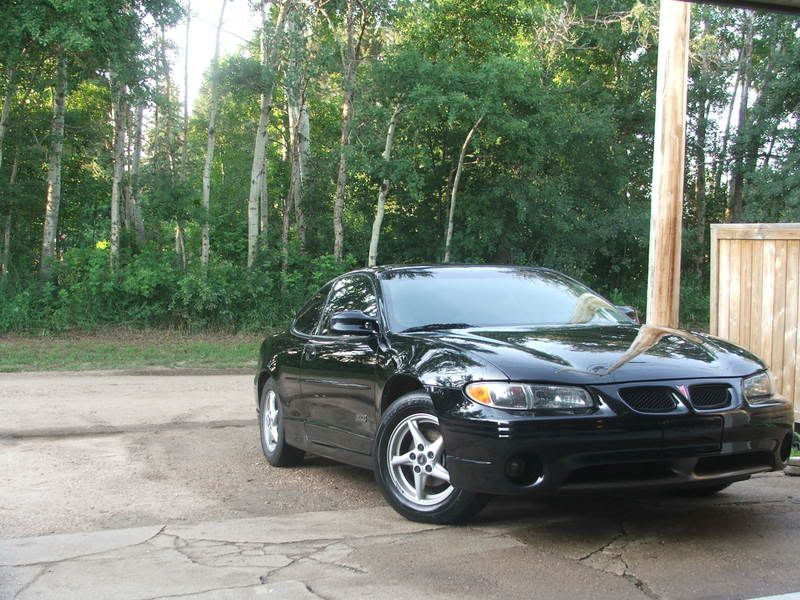
So the choice was made, and we ended up purchasing a Black 2002 GTP from the final production year of two-door configuration. Sold from an Edmonton dealership as a GM Optimum used vehicle with around 70,000kms, we purchased a 1 year warranty as a just in case.

Initially we were quite happy with the first non-Ford purchase; it got great fuel economy on the highway, (well into the 35 MPG range) had cool options like dual-zone climate control, a HUD, (Heads-Up-Display) and the supercharger offered great boost to pass capability. Surprisingly you could fit a 6’5” adult in the back seats with comfort, and the wife adored the heated driver seat in the winter… Overall it was great; the brakes sucked but were improved with some Hawk HPS pads, and the transmission was lazy but it worked fine.

A missed feature was a performance shift button found in all pre-2001 GTPs, I understand it would really liven up the driving experience, but GM had far too many warranty claims with destroyed transmissions so it was disabled for all future models. As a result the car would flat out refuse to drop down to 2nd gear on a WOT downshift, and don’t think moving the shifter will help, the vehicle PCM maintains full control during WOT conditions. Even on the upshifts you can leave the gear selector in 1st flatten it and it will continue to change up through the gears 1-2-3, only Overdrive will stay locked out. So there is no gain in manual shifting it, it does what wants anyway.

You can probably tell there is a foreboding overtone to the whole article. So where did it all go wrong? About 3,000kms after the warranty was up of course.

I think the trouble first started with a small thing like a chip in the windshield, which to have replaced required a HUD compatible unit that cost a fair bit more than the “regular” type. This was never repaired as there were other things that came more pressing.

During the second winter of ownership the heater blower fan failed. Removal is bothersome with Torx fasteners under the dash. Inspection revealed the motor to be full of water and rust, turns out these cars have a tendency to drain the cowl and A/C condensation into the heater fan. $130 and an afternoon of work behind the dash later, it was fixed.

A few months after that, around 105,000km the car destroyed a rear wheel bearing. Of course these are non-rebuildable assemblies that come packaged as a spindle, hub, bearing, and ABS sensor unit. My cost was in excess of $230 cutting a wicked deal, list price is a fair bit more.

Not more than a month later the driver side power window switch said no more, and luckily failed in the up position. As the two door cars are somewhat less common than the four door units, there were no junkyard parts available, so this dealer only item cost us about $300, as another assembly of course.

At that point I was mildly irritated with this ongoing “nickel and dime” expenses but I figured we were done, and I couldn’t be more right.

That spring… cancer.

It first started as a small flake under the rear driver’s wheel arch, in no time at all it was the size of the palm of your hand. Not just the clearcoat, or the paint, but right down to bare metal. Professional estimates were obtained and the prognosis; too severe to blend, full respray, left untreated it was predicted entire panel would follow. But serious consideration was recommended; as more rust was discovered under the sills, strut towers, trunklid, (which was full of water from a faulty spoiler seal) and the doors.

To drive another nail in the casket, the power moonroof was having fits despite being periodically lubricated and cleaning the tracks. Something in the gear drive started shuddering and skipping, it became another one of those “do not use” features.

There were a few other minor things, but by this time the decision was made to trade the car that summer, before this Quebec lease return cost any us more money. Upon trading, the car clocked in at less than 115,000kms, had developed a leaking transaxle seal, and dreadfully needed a set of struts even though the dealer had replaced them just prior to purchase.

 The Silver Car:


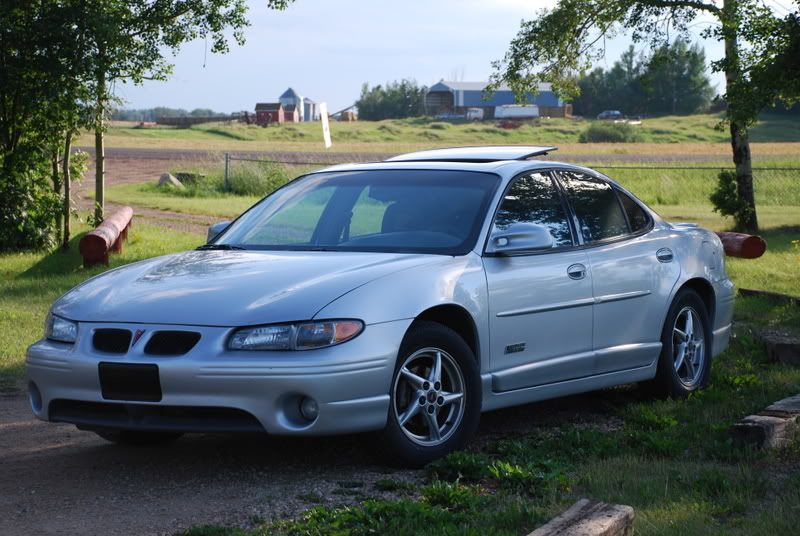
The silver car you ask, that implies they got another one, and we did. As this is the wife’s car, and she really found nothing wrong with the GTP from a function point of view, she wanted to try another. To be honest, I kind of wanted to give the platform another chance, it was easy to put off much of the Black car’s problems to being from previous abuse and exposure to Eastern Canadian winters.

So in the summer the black car went away, and a shiny and slightly newer 2003 four door GTP took its place. Immediately I was quite impressed with the ride quality and reduced steering effort, I suspect there were more problems with the black car than I had already discovered.

Got a lemon, traded up, and happily ever after right?

Not so much.

This car had been equipped with a few different options from the black car, but most notably was the lack of a HUD and addition of a factory BOSE stereo system. While I’m not an audiophile, I did appreciate the new arrangement, but sadly someone spec’d out a base single CD head unit without equalizer.

That particular head unit is the cause for my initial concern, within the first three months of ownership; the display quit working. So now the clock function is gone, and tuning radio stations is a matter of listening to each for awhile, not a deal breaker but what was I in for now?

As that winter came and progressed, so did the problems, firstly the car has an overly optimistic fuel gauge. 500kms travelled and still at ¾ of a tank, since I know this car isn’t equipped with the Roadwarrior’s 200 litre fuel bunkers, we had problem number two. Currently the process is to set the trip meter on each fill and seek gasoline upon travelling 400km’s (gives 100km buffer) so far it hasn’t left us stranded, but her CAA membership is kept up just in case.

Problem number 3, this one is a bigger one.

One winter morning in January, I received a call from the wife while I was at work, she told me the engine overheat light had tripped and she had parked the car immediately. I asked if anything else was observed and she complained the car wasn’t making heat.

Looking at the outdoor temps of -18*C coupled with the lack of heat, I knew I had troubles, likely expensive ones. I went down to take a look and found the radiator was empty with no obvious leaks, I topped up, burped the system and adopted the wait and see attitude. This action returned full heat, and got her going for the next week, and once the problem recurred I had already made a decision, send it to the dealer. This could be intake gaskets or head gaskets, one not so bad, the other would be a fair bit of downtime for me to tackle at home. Pulling the exhaust manifold from the rear cylinder head on these cars isn’t fun without lift we couldn’t really have her daily driver out of commission for too long.

The dealer was able to diagnose the problem in less than 20 minutes and the repair was completed before lunch. The issue? Blown intake gaskets, and a cracked thermostat housing, $1200 parts and labour, the service manager sympathetically offered, “We get this problem a lot.” That’s why the parts are kept in stock I understand.

Fun fact; It turns out that GM’s proprietary DEX-COOL could be called gasket kryptonite, as it dissolves them quite quickly.

We were trouble free until spring, when a front wheel bearing gave up at 95,000kms, see above for the cost. Last month the windshield washer died, it was cheaply fixed from a local self service junkyard, where the lot is dominated by GM front drive cars. Teardown of the washer pump revealed it chock full of rust, clearly the O-ring had failed allowing the pump to flood.

Recently, I’ve spotted a few little leaks and squeaks that don’t bode well for the future of this car, and given the track record of these two vehicles, we are now beginning the search for a suitable replacement. This time however I’m not sure where this search will take us but surely any GM product will be met with extreme apprehension. Speaking with other past Grand Prix owners we are so far doing pretty well, for example our transmission hasn’t failed twice in five years.

Here’s a bonus section, you still want to try your luck and really make the most of this performance vehicle?

Modifying a Pontiac GTP

Short answer, there are 9 seconds GTPs out there, but for the money and time, nearly anything will run 9 seconds. Road racing with an under-steer prone, automatic, FWD, 3500 pounder with marginal braking capacity, isn’t my idea of the best way to go about business.

Long answer, there are only a few companies that specialize in the W-body platform, perhaps the most successful is ZZ Performance. They offer a wide range of performance parts to really enhance these vehicles and fairly good prices, sales plug aside they also have an informative technical section.

Things you may wish to know:

1.    Increasing Boost – Easy as a pulley swap, 6 psi stock leaves lots of room to grow, until you consider there is no factory intercooling present. Be prepared to plan for that purchase.
2.    Tuning – Currently there are no handheld user tools, you must physically swap PCMs to a burned module from one of the very few tuners. They are VIN specific so that can cause problems at the dealer if you aren’t careful.
3.    Transmission – Hit and miss at stock power levels and guaranteed DOA at 300 BHP
4.    The exhaust is crap and expensive to upgrade, consider the U Bend delete
5.    Final Drive is in the 2.93 range from factory, performance option is in the 3.30 range, not a stellar offering really.
6.    Differential – Factory open, very expensive and limited LSD options, plan the upgrade for when the transaxle fails.
7.    Brakes – Either hawk pads or F-body brakes, that’s about it.
8.    Wheels & Tires – The factory 225’s only allow ½” of clearance between the sidewall and the strut coilover spring cup, pick non-standard sizes with caution.

I’ll conclude that this otherwise sound platform was short-changed by the ineffectiveness of its supporting components, hence the title; “Looks good on Paper.” We are currently planning to replace this vehicle during summer of 2010 with something...different.

Thanks for reading

Darren (5.0L) Lynch

Read the Entire Living with a Pontiac Series:

Looks Good on Paper:

UPDATE 1 –

UPDATE 2 –

Back in the Grind - Looks Good on Paper & Living with a Pontiac

Opening the Throttle

I've finally made the transition to blogging and am quite excited to explore this media in relation to my automotive hobby. I'm still doing setup so watch this space as things develop.

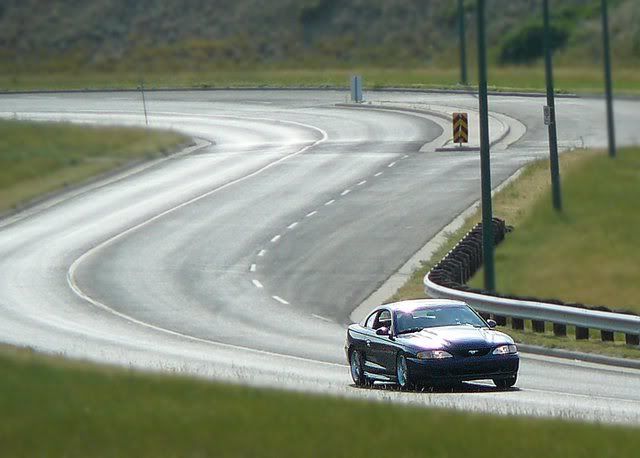
Darren5.0L's Kenne Bell'd 1995 Mustang GTS, the car that started it all, (for me) more on this unit later.